YouTube Shorts vs. Long-Form: Which Grows Your Channel Faster? (Honest Answer)
Every few months, a new wave of YouTube advice sweeps through creator communities with absolute conviction. Six months ago it was "Shorts are dead, long-form is back." Before that it was "Long-form is dying, go all in on Shorts." The content strategy discourse on YouTube has the memory of a goldfish and the confidence of someone who just read one viral tweet and decided they understood the entire platform.
Meanwhile, channels are quietly growing — or quietly stagnating — based on decisions about format, frequency, and content mix that have very little to do with whichever trend happened to be loudest that week.
The short answer to "which grows your channel faster" is: it depends on what you mean by "grows." The long answer is everything that follows — based on how YouTube's algorithm genuinely works, what the data from growing channels actually shows, and what the nuanced, honest answer looks like when someone stops oversimplifying it.
First: Understand That YouTube Is Two Different Algorithms
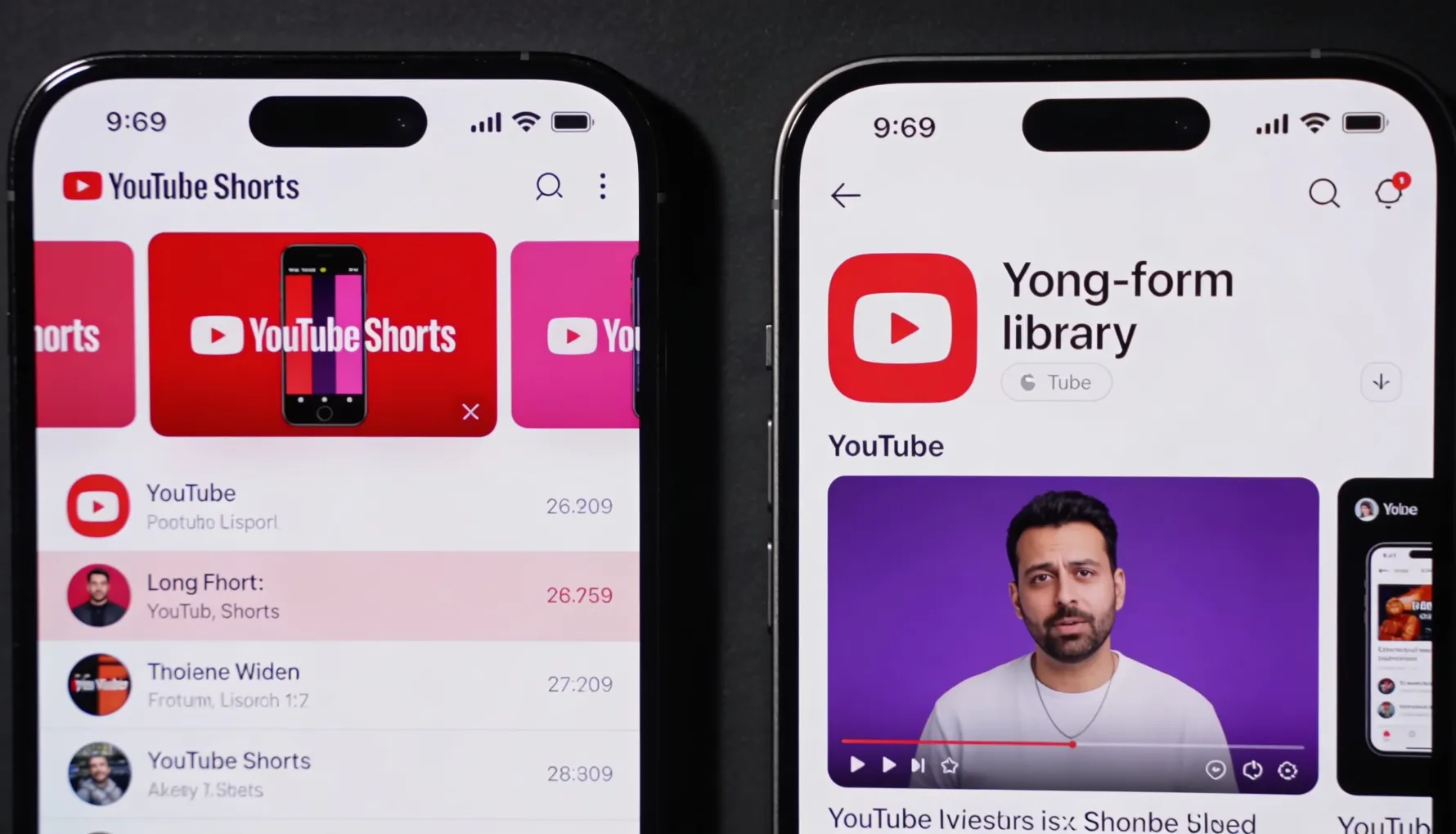
The most important thing to understand before comparing Shorts and long-form is that YouTube doesn't treat them as variations of the same thing. It treats them as fundamentally different content types, runs them through different distribution systems, and measures their performance against different benchmarks.
Primary Recommendation Engine
- Built around watch time, viewer satisfaction, and click-through rate
- Builds a content model for your channel over time
- Viewers in intentional viewing session — settled, time-allocated
- Signals accumulate to define your channel's algorithmic identity
- Foundation of algorithmic trust and channel authority
Separate Shorts Feed
- Optimised for completion rate above almost everything else
- A Short watched to completion or rewatched gets pushed aggressively
- Viewers in TikTok-like browsing mode — fast, low friction
- Separate recommendation logic from the main YouTube feed
- Very low tolerance for content that doesn't grab immediately
Understanding that you're operating in two different ecosystems simultaneously is the prerequisite for everything else in this conversation. Advice about "the YouTube algorithm" that doesn't distinguish between these two systems is almost certainly incomplete — and may be actively misleading.
What YouTube Shorts Actually Does Well
Shorts has genuine strengths worth understanding clearly, because the dismissive narrative about Shorts being a gimmick misrepresents a format that serves specific purposes very effectively.
Discovery Reach
Shorts gets your content in front of people who are not searching for you and not subscribed to you — a cold audience encountering your content in a pure recommendation context. Because the Shorts feed operates more like TikTok's For You Page than like YouTube's subscription-based feed, a great Short can reach an enormous number of new viewers with almost no channel history required. For channels trying to break through the cold start problem, Shorts can generate views at a scale that would take months of long-form content to accumulate organically.
Speed of Iteration
A Short takes a fraction of the time to produce compared to a polished long-form video. This means you can test more ideas, identify what resonates with audiences faster, and iterate at a pace that long-form production cycles make impossible. Creators who use Shorts strategically treat them as a testing environment — a way to find out what their audience responds to before investing the production time that long-form requires.
Content Repurposing
Long-form videos that are already produced can often be broken into multiple Shorts — the most compelling sixty-second segment, the key insight distilled, the most visually dynamic moment extracted and reframed. This extends the reach of content you've already created without proportional additional work.
What Long-Form Video Actually Does Well
Long-form video does things that Shorts genuinely cannot — and those things are disproportionately important for the kind of channel growth that compounds over time.
Subscriber Quality
A viewer who watches a twelve-minute video, watches it to completion, and then subscribes has made a significant investment of attention. They know what they're subscribing to — your format, your voice, your depth of treatment. When you publish a new video, they're likely to watch it because they've established a relationship with your content at a depth that a sixty-second Short encounter rarely creates. Long-form subscribers return. Shorts subscribers often don't.
Watch Time Accumulation
For channels pursuing monetisation, watch time is the primary metric — both for reaching the YouTube Partner Program threshold and for the revenue generated after monetisation. A viewer who watches a thirty-minute long-form video generates thirty minutes of watch time. A viewer who watches a sixty-second Short generates sixty seconds. Even at dramatically lower view counts, long-form content accumulates the watch hours that drive monetisation eligibility and revenue substantially faster.
Evergreen Search Traffic
A well-optimised long-form video answering a specific question — "how to fix a leaking bathroom faucet," "best budget mechanical keyboards under $100," "how to start investing with $500" — can generate organic search traffic for years after it's published. YouTube's search function works more like Google than like TikTok, and long-form content that genuinely answers search queries benefits from this evergreen discovery mechanism in a way Shorts currently don't.
The Subscriber Quality Problem — The Most Misunderstood Dimension
The subscriber quality issue deserves more space because it's the most misunderstood dimension of the Shorts versus long-form debate — and misunderstanding it leads to decisions that look successful by some metrics while actually undermining channel health long-term.
Shorts viewers who subscribe often don't return to watch long-form content from the same channel. The viewing behaviour in the Shorts feed is fundamentally different from the viewing behaviour in the main YouTube feed, and subscribers acquired in one context don't automatically transfer their viewing behaviour to the other.
Channels that go "all in on Shorts" to grow subscribers fast often discover that their subscriber count — which looked like an audience — is actually a list of people who enjoyed a very different type of content experience. Subscriber counts increase rapidly while view counts on regular videos remain flat. The Shorts subscribers aren't watching. They're subscribed in name, which boosts a vanity metric, but they're not showing up for the content that actually matters for the channel's health and revenue.
Channels that build primarily through long-form and then add Shorts don't typically see the Shorts erode their long-form audience. The long-form subscribers are still there, still watching, still generating the watch time that matters. The Shorts add incremental discovery reach without cannibalising the core audience relationship. Shorts subscribers often don't convert to long-form viewers — but long-form subscribers will watch good Shorts. This asymmetry is one of the most practically important findings for anyone making decisions about their content mix.
The Niche Variable — Why Your Topic Changes Everything
The Shorts versus long-form calculus shifts significantly depending on what your channel is about. Any guide that ignores this is giving you incomplete advice.
| Content Type | Best Format | Why |
|---|---|---|
| Entertainment, comedic sketches, trend commentary, satisfying process videos | Shorts-Friendly | Delivers full value in 60 seconds or less. Fighting it by producing long-form versions adds length without adding substance. |
| Quick tips, reaction content, highlight reels | Shorts-Friendly | Natural content length is short. Viewer's need is satisfied in the format. Long-form is a worse version of the same content. |
| Tutorials, educational explainers, product reviews, cooking walkthroughs | Long-Form | Requires time to deliver value. A viewer learning to edit video needs more than 60 seconds. Truncating creates a fundamentally worse experience. |
| Documentary-style content, in-depth analysis, fitness programs, travel vlogs | Long-Form | Depth is the product. Short-form versions don't serve the viewer's actual need and don't attract the audience that values what you do. |
| Any niche where both depth and discovery matter | Hybrid | Long-form as primary format for audience building and depth. Shorts as secondary format for discovery and repurposing. |
Choosing content format based on what seems to be growing on YouTube right now rather than what format actually serves their topic and their audience. Format-first thinking produces content that's optimised for the distribution mechanism but fails the viewer. Topic-first thinking produces content that serves the viewer in whatever format that naturally requires.
The Algorithm in 2026 — What's Actually Changed
YouTube has spent the last several years refining how Shorts integrates with the broader platform ecosystem. The early days of Shorts, when the format was heavily subsidised to compete with TikTok and creators saw inflated view counts as YouTube pumped traffic into the new feature, are over. Shorts now operates in a more mature, more competitive environment where quality signals matter more than they did during the growth-incentive phase.
YouTube has also made changes to how Shorts subscribers are counted and how they translate to channel metrics. The platform has been more explicit about the distinction between Shorts viewers and long-form subscribers, and the analytics dashboard now gives creators better visibility into where their subscribers are coming from.
Channels that build genuine audience relationships — consistent viewership, strong watch time, high click-through rates, comments and community engagement — regardless of the format those relationships are built in. There's no algorithmic bonus for choosing one format over the other. The bonus is for content that viewers genuinely want to watch and actually watch through. Shorts can generate faster initial exposure, but exposure that doesn't convert to meaningful viewership doesn't build the algorithm's confidence in your channel the same way genuine watch time does.
Which Format Fits Where You Are — A Stage-Based Framework
One of the most practical frameworks for thinking about this decision is matching the format to your channel's current growth stage rather than trying to identify the universally superior format.
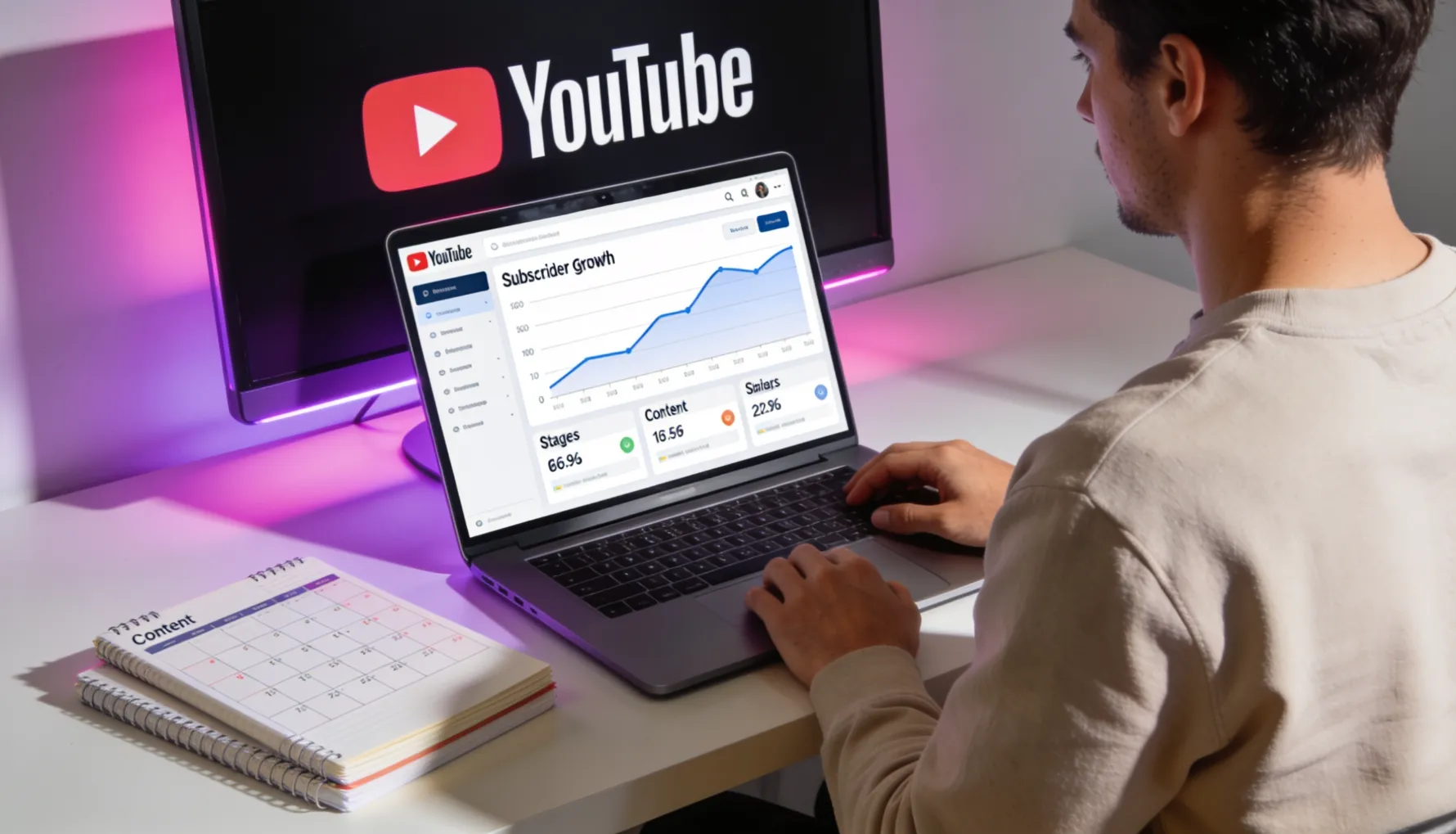
The primary problem is discoverability. Nobody knows you exist and the algorithm has almost no data to work with. Shorts can solve a real problem here — getting content in front of cold audiences at a scale that early-stage long-form channels rarely achieve organically.
Optimal approach: produce Shorts consistently for discovery, and produce long-form content at a sustainable pace to build watch time, subscriber quality, and the algorithmic channel model that long-term growth requires. The Shorts bring people in. The long-form gives them a reason to stay.
You have some algorithmic history. Some content has performed well enough to demonstrate your channel's potential. The cold start problem is partially solved. Double down on whatever format has been generating your most engaged viewership — not the most total views, but the most engaged, highest watch-time, lowest drop-off viewership.
That signal is different for every channel, and it's the one the algorithm is most responsive to. The answer lives in your analytics, not in generic advice.
The question becomes less about which format grows the channel and more about how to use both formats in a coherent strategy that serves different purposes. Long-form for depth, community building, watch time, and search-driven evergreen traffic. Shorts for discovery, trend participation, content repurposing, and reaching the Shorts-specific audience that never finds you through traditional search and recommendations.
Revenue Reality — Where the Money Actually Comes From
If your channel goals include generating income — a legitimate and reasonable goal that shouldn't require apology — the Shorts versus long-form comparison has a clear answer for the revenue dimension.
Long-form video generates substantially more ad revenue per view than Shorts. YouTube's ad rates for Shorts have been lower since the format launched, and while this gap has narrowed as Shorts advertising has matured, it remains significant. A fifteen-minute video from a monetised channel might include two to four ad placements. A sixty-second Short has one at most, and often none that generates significant revenue. To generate the same revenue from Shorts as from long-form, you need dramatically higher view counts.
Beyond direct ad revenue, long-form content also supports other monetisation streams more effectively. Sponsorships and brand deals are almost universally calculated based on long-form placement. Channel memberships and Super Thanks are driven by the community depth that long-form content builds. Merchandise sales correlate with audience loyalty that short-form viewing rarely generates at the same depth.
For channels with monetisation goals, long-form is the primary revenue engine. Shorts can complement and accelerate discovery, but they're not the path to sustainable YouTube income at most channel sizes.
The Hybrid Strategy — What the Fastest-Growing Channels Are Actually Doing
The channels growing fastest in 2026 are almost never doing only one or the other. They're using both formats with intention and clarity about what each is supposed to accomplish.
Long-form is primary — the foundation of the channel's identity, audience relationship, algorithmic trust, and revenue generation. Shorts are secondary — used for discovery acceleration, trend participation, and content repurposing — but always in service of a channel whose core identity is built in long-form.
The Practical Workflow
Produce your long-form content first, on whatever schedule you can maintain consistently. Then identify the segments within each long-form video that work as standalone Shorts — a compelling argument, a surprising finding, a visual moment, a clear tip — and produce those as Shorts in the weeks following the long-form upload.
This approach generates Shorts content without requiring a completely separate production stream, keeps your Shorts thematically aligned with your long-form channel identity, and uses Shorts to drive discovery toward a long-form channel that's already built to convert viewers into genuine subscribers.
Shorts first, long-form as an afterthought. This creates the subscriber quality problem described earlier and builds an audience that's misaligned with where the channel's identity and monetisation actually live. The subscribers accumulate. The views on long-form don't follow. The channel looks healthier than it is by every metric that actually matters.
The Honest Answer to the Title Question
Which grows your channel faster — YouTube Shorts or long-form? Here's the actual answer, broken down by what "grows" means.
The question "which grows faster" implicitly assumes that faster subscriber count growth is the goal. But subscriber count growth is a proxy for channel health, not the thing itself. A channel with 50,000 disengaged Shorts subscribers is less healthy — by every metric that actually determines a channel's future — than a channel with 5,000 subscribers who watch every long-form video you publish. Build the audience you want to have, not the number you want to display.
FAQ: YouTube Shorts vs. Long-Form
What to Do This Week Based on Where You Are
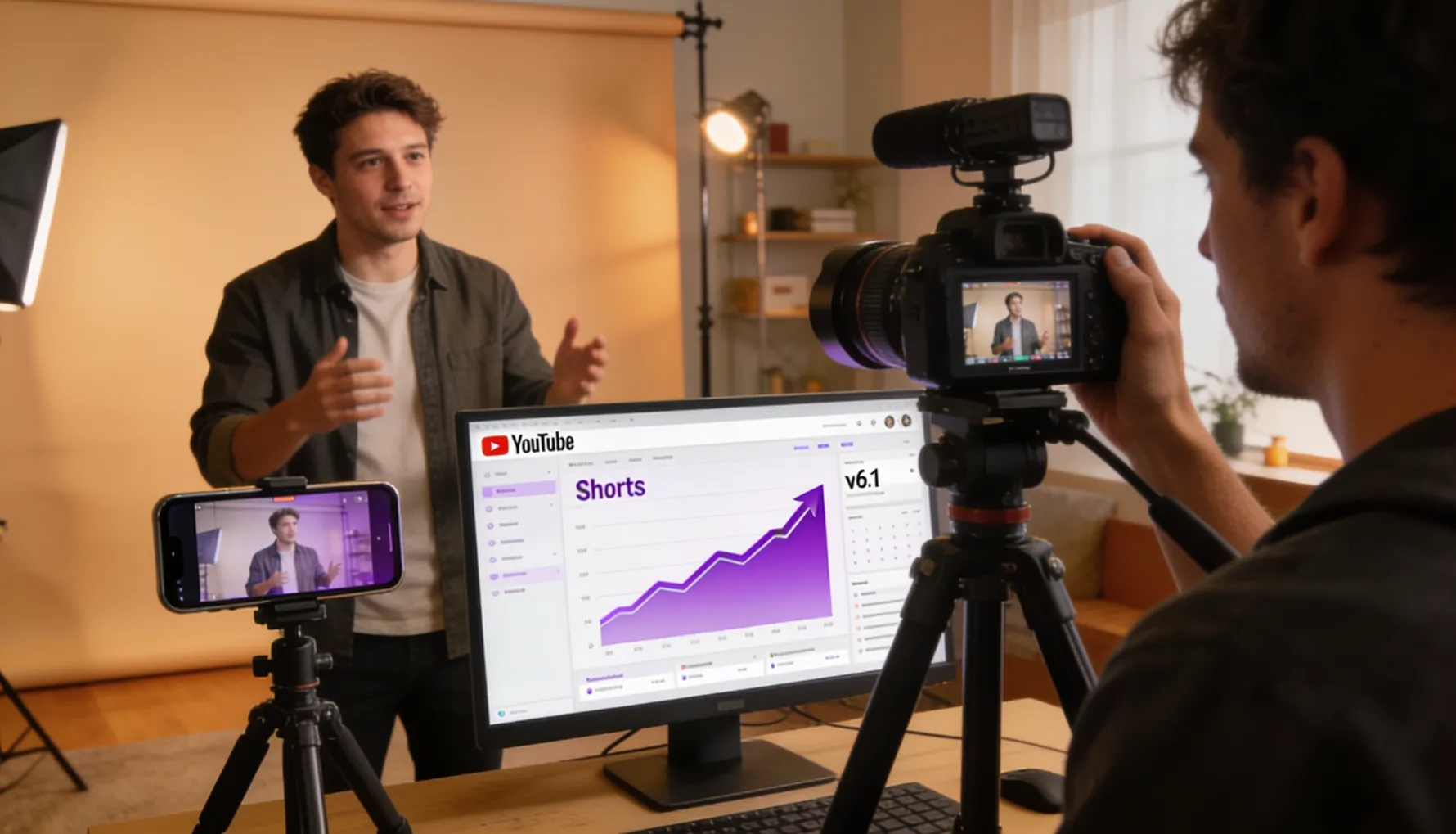
If You Have a New Channel with No Clear Strategy
Start with long-form content on searchable topics in your niche — content that answers specific questions real people are searching for. Produce one Short per week repurposing the best moment from each long-form video. This builds the algorithmic foundation you need while capturing the Shorts discovery opportunity simultaneously.
If You've Been Doing Shorts Only and Long-Form Views Are Disappointing
Start producing one strong long-form video per month — just one, made well — and treat it as the core content your Shorts exist to support. Measure the watch time and engagement quality on that long-form video, not just its view count. Over several months, you'll see whether your Shorts audience contains people who will follow you into long-form. Adjust strategy based on that data.
If You've Been Doing Long-Form Only with Slow Growth
You're probably solving a discovery problem, not a content quality problem. Add a Short production step to your existing workflow — extract the best sixty seconds from your last five videos and post them as Shorts. This doesn't require additional content creation, just additional editing time, and it opens the Shorts discovery channel to a long-form channel already built to convert viewers into real subscribers.
YouTube will continue changing how it weights Shorts versus long-form. The RPM gap will shift. New features will emerge. Advice that's accurate today may be partly outdated in eighteen months. What won't change: audiences build relationships with content that serves them well, in whatever format serves the topic best, over time. Make content that genuinely serves your audience. Choose the format that genuinely fits your topic. Build the habit of showing up consistently. The rest is details — important details, but details nonetheless.
Ready to Accelerate Your YouTube Channel Growth?
GetTwitterRetweet.com offers YouTube views, subscribers, watch hours, and likes — the credibility signals that help quality long-form content get evaluated rather than filtered past, regardless of where you are in your channel's growth stage.
Complete Your YouTube Growth Strategy
Every metric that helps your channel clear the cold start threshold and your content get evaluated on its actual merits