Twitter Impressions vs. Views — What's the Difference and Why It Matters
Table of Contents
At some point in your Twitter/X life, you have probably stared at your analytics dashboard with the mild confusion of someone reading a menu in a language they almost speak. The numbers are right there. Impressions. Views. Profile visits. Engagements. Link clicks. And then you notice that your tweet has 4,200 impressions and 1,100 views and you start wondering -- wait, aren't those the same thing?
What impressions actually measure, what views actually measure, where the numbers come from, why they diverge, which one matters more for which purpose, and how to use both together to understand your content's performance rather than just stare at numbers that feel important but don't tell you anything actionable.
Why This Confusion Exists in the First Place

The problem starts with language. In everyday English, "impressions" and "views" both sound like they're measuring the same basic thing: people seeing your content. On Twitter/X, they're not -- they're measuring different things, capturing different moments in the content consumption journey, and their values can differ significantly depending on how your content is being encountered.
The second source of confusion is that Twitter/X has changed how it defines and displays these metrics multiple times over the platform's history. Older articles and guides may be describing definitions that were accurate at one point and are now outdated. The platform's rebranding to X and subsequent changes to the analytics interface have added additional layers of definitional drift. What follows is accurate to how these metrics work in 2026.
What Impressions Actually Measure
Display Events
Every time your tweet appears on a screen -- in a timeline, search result, thread, retweet, list, or notification -- an impression is counted. Not every time someone reads it. Every time it loads in a visible position.
Consumption Events
When someone actually opens a tweet and spends meaningful time with it -- the detail view opened, content engaged with at a level beyond passive scroll exposure. A richer and more deliberate level of encounter than a display event.
The key word in understanding impressions is appears. An impression is a display event, not a consumption event. It tells you that your tweet was placed in front of a person's eyeballs. It does not tell you that those eyeballs registered it, read it, or in any meaningful sense experienced it. If you have 3,000 followers and they each scroll through a timeline that includes your tweet, that is 3,000 impressions -- even if every single one scrolled past in half a second. Each appearance is counted, regardless of the depth of the encounter.
A tweet with 50,000 impressions might have reached 50,000 people who each noticed it for a fraction of a second. It might also have reached 50,000 people who read every word carefully. The impression count is identical in both scenarios. Everything that distinguishes those scenarios lives in other metrics.
What Views Actually Measure
A view on Twitter/X is recorded when someone actually opens a tweet and spends meaningful time with it. The exact threshold has not been published in precise technical terms, but based on observable behaviour in analytics, a view requires more than the tweet loading in a scrolling timeline. It typically corresponds to the tweet being actively tapped or clicked, the detail view being opened, or the content being engaged with beyond passive scroll exposure.
For tweets with video content, the view definition becomes clearer: a video view is counted when the video plays for a defined minimum duration -- typically two seconds with at least 50% of the video in frame. For text tweets, the view metric functions as a proxy for active engagement, distinguishing between the tweet appearing in a feed (impression) and the tweet being interacted with in a way that suggests the person actually engaged with the content.
Your view count is a more meaningful indicator of genuine content consumption than your impression count. It measures a different and richer level of encounter. When someone registers as a view, you have stronger evidence that they actually experienced your content -- not just that their feed happened to load while your tweet was in it. The gap between impressions and views is where the most useful analytical signal lives.
Why Impressions Are Always Higher -- The Expected Math
If you look at any tweet with enough reach to generate meaningful data, impressions will almost always be significantly higher than views -- often by a factor of three to ten or more. This is the expected math of how content is served on a platform used by scrolling humans.
The gap between impressions and views -- specifically, the ratio of views to impressions -- tells you something real about your content's ability to stop the scroll. A tweet with 10,000 impressions and 5,000 views (50% view rate) is genuinely stopping people. A tweet with 10,000 impressions and 300 views (3% view rate) is being technically delivered but not landing. The distribution is there; the pull isn't.
High Impressions, Low Views -- What That Pattern Actually Means
High impressions, low views is the most important pattern to understand -- it's the most common and the most frequently misread. Creators who track only impressions see a high number and conclude their content is performing well. What they're missing is that scale of delivery and depth of impact are completely different things.
Cause 1 -- Weak Hook Performance
Your tweet loaded in thousands of timelines and nobody slowed down because the first line didn't give them a reason to. The impression was served. The hook didn't convert it to a view. This is a content issue -- specifically a first-line issue -- and it's fixable. Rewriting the hook with more specificity, more curiosity, or a more direct promise of value will close the gap between impressions and views on similar content.
Cause 2 -- Audience-Content Mismatch
Your tweet reached a large audience through a retweet, trending hashtag, or quote tweet from a large account -- but that audience wasn't the right one for your content. Impressions spiked. Views didn't follow because the people your content reached weren't the people your content was for. Reaching the wrong audience at scale is less valuable than reaching the right audience at smaller scale.
Cause 3 -- Timing
A tweet posted during a period when your audience is heavily active generates more timeline exposures and therefore more impressions -- but if those exposures occur during a rushed commute scroll, the view rate will be lower because the behavioural context doesn't favour stopping to engage. The same tweet posted during a more leisurely browsing window might generate fewer impressions but higher views per impression.
Views Without Proportionate Engagement -- The Next Analytical Layer
Once you understand the impressions-to-views ratio, the next layer is the views-to-engagement ratio -- this is where the story about your content gets most specific. Someone who views your tweet has actively engaged with it at a reading level. Whether they then like it, reply, retweet, click a link, or do nothing further is determined by the quality and resonance of what they found when they stopped.
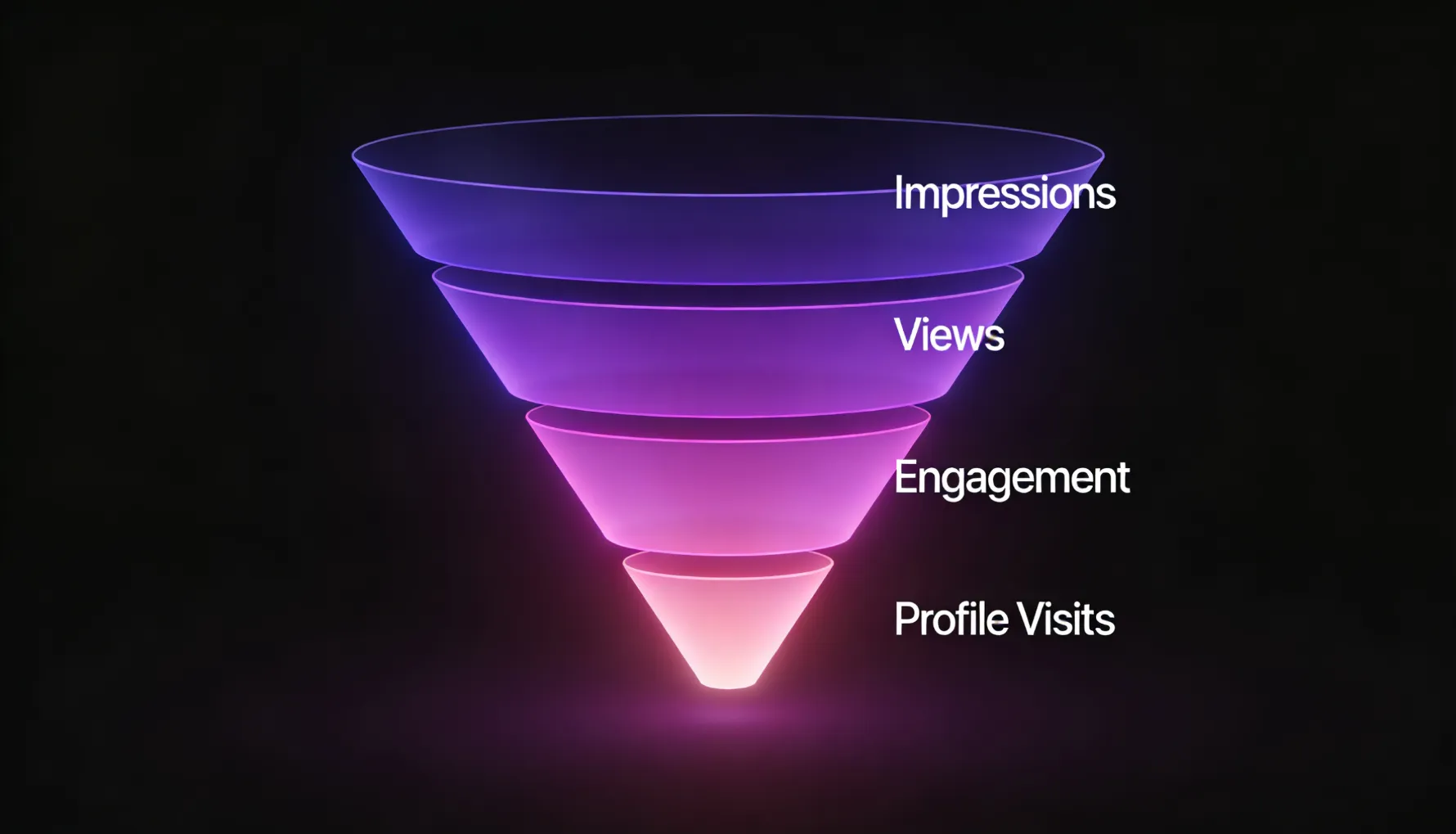
High impressions, low views = hook problem. The tweet is being delivered but not compelling people to stop. Fix: rewrite the opening line with more specificity or a stronger curiosity trigger.
High views, low engagement = content or resonance problem. People stopped and read but didn't feel strongly enough to act. Fix: review what emotion or utility the tweet was aiming for and whether it actually delivered. Agreement, surprise, entertainment, and actionable usefulness are the strongest engagement motivators.
Which Metric Matters More -- Depends Entirely on Your Goal
Not everyone using Twitter/X is optimising for the same outcome, and the relative importance of impressions versus views shifts depending on what you're actually trying to achieve. Knowing your goal before you open your analytics is what makes the data actionable rather than just interesting.
Your Goal Primary Metric Why Brand Awareness Impressions You're measuring distribution. Whether each person deeply engaged matters less than whether a large number encountered your name or message at any level. Community Building Views + Views-to-Engagement Ratio You're measuring depth of impact. Ten people who genuinely engaged are more valuable than a thousand who scrolled past. Driving Traffic Link Clicks per View Views provide essential context: 100 clicks from 500 views (20% CTR) is far more efficient than 100 clicks from 2,000 views (5% CTR). The view data tells you whether a low click rate is a delivery problem or a CTA problem. Thought Leadership Engagement Quality Under Views Replies from credible accounts, retweets from respected figures, quote tweets engaging seriously with your ideas under a reasonable view count build authority more effectively than high impressions with shallow engagement. Audience Growth Profile Visits per View A tweet can be widely read and do almost nothing to grow your following if it doesn't make readers curious about who you are. Profile visit rate per view is the most direct metric for audience-building impact.Impressions and the Algorithm -- More Than Just a Reporting Metric
Twitter/X's algorithm uses early impression and engagement data to determine how widely to distribute a tweet beyond its initial audience. When you post a tweet, it's initially served to a sample of your followers and some adjacent users. The algorithm watches what happens in the first thirty to sixty minutes. If the tweet generates strong engagement relative to the number of impressions served, the algorithm interprets this as a quality signal and distributes more widely.
A tweet that generates 200 impressions and 40 engagements in its first hour tells the algorithm something very different from a tweet that generates 200 impressions and 2 engagements. The first gets expanded distribution. The second gets quietly buried. This is why timing matters so much -- posting when your audience is most active means the initial impression sample generates faster engagement, which triggers distribution expansion sooner, which produces the larger impression totals that follow from algorithmic amplification. Impressions aren't just a reporting metric. They're also telling you whether the algorithm decided your content was worth amplifying.
Profile Views -- The Third Metric Worth Adding to This Conversation
Profile visits are recorded when someone clicks through to your profile page -- from a tweet, a mention, a search result, or anywhere else. The profile visit count tells you how often your tweets are compelling enough not just to read (view) but to make someone curious enough to want to see more. The ratio of profile visits to views is one of the most useful and undertracked metrics on the platform.
A tweet that generates many views but almost no profile visits delivered value people consumed and moved on from -- useful perhaps, but not identity-building. A tweet that generates proportionally high profile visits indicates content that made people think "I want to see more from this person" -- which is exactly the quality of impression that drives genuine follower growth.
Impressions tell you about distribution -- how many times your tweet was placed in front of a human being. Views tell you about consumption -- how many of those humans actually stopped and engaged at a reading level. Profile visits tell you about audience building -- how many of those readers became curious enough about you to want more. Each stage is downstream of the previous one, and each is influenced by specific choices you make in how you create and present your content.
Buying Twitter Impressions -- What It Is and When It Makes Sense
Purchased Twitter impressions are essentially purchased distribution -- your content being shown to a wider audience than your organic reach would achieve. The function they serve is specifically the distribution function that impressions measure: getting your tweet in front of more people. A new account trying to build algorithmic trust can benefit from tweets that show higher impression counts -- both because the social proof of visible reach influences how new viewers perceive the content, and because the engagement that follows broader distribution can create the algorithmic signal that leads to organic amplification.
Purchased impressions from quality sources -- real-looking accounts generating authentic-seeming distribution patterns -- serve the social proof and algorithmic signalling functions they're intended to serve. Impressions from obviously artificial sources generate the number without the signal, and may produce anomalous data patterns that both sophisticated observers and platform detection systems can identify. Used thoughtfully -- on your best content, at volumes proportional to your account's organic activity, from a service with transparent delivery practices like GetTwitterRetweet.com -- purchased impressions are a distribution supplement, not a replacement for organic content quality and engagement strategy.
FAQ: Twitter Impressions vs. Views
The Four-Question Analysis Framework
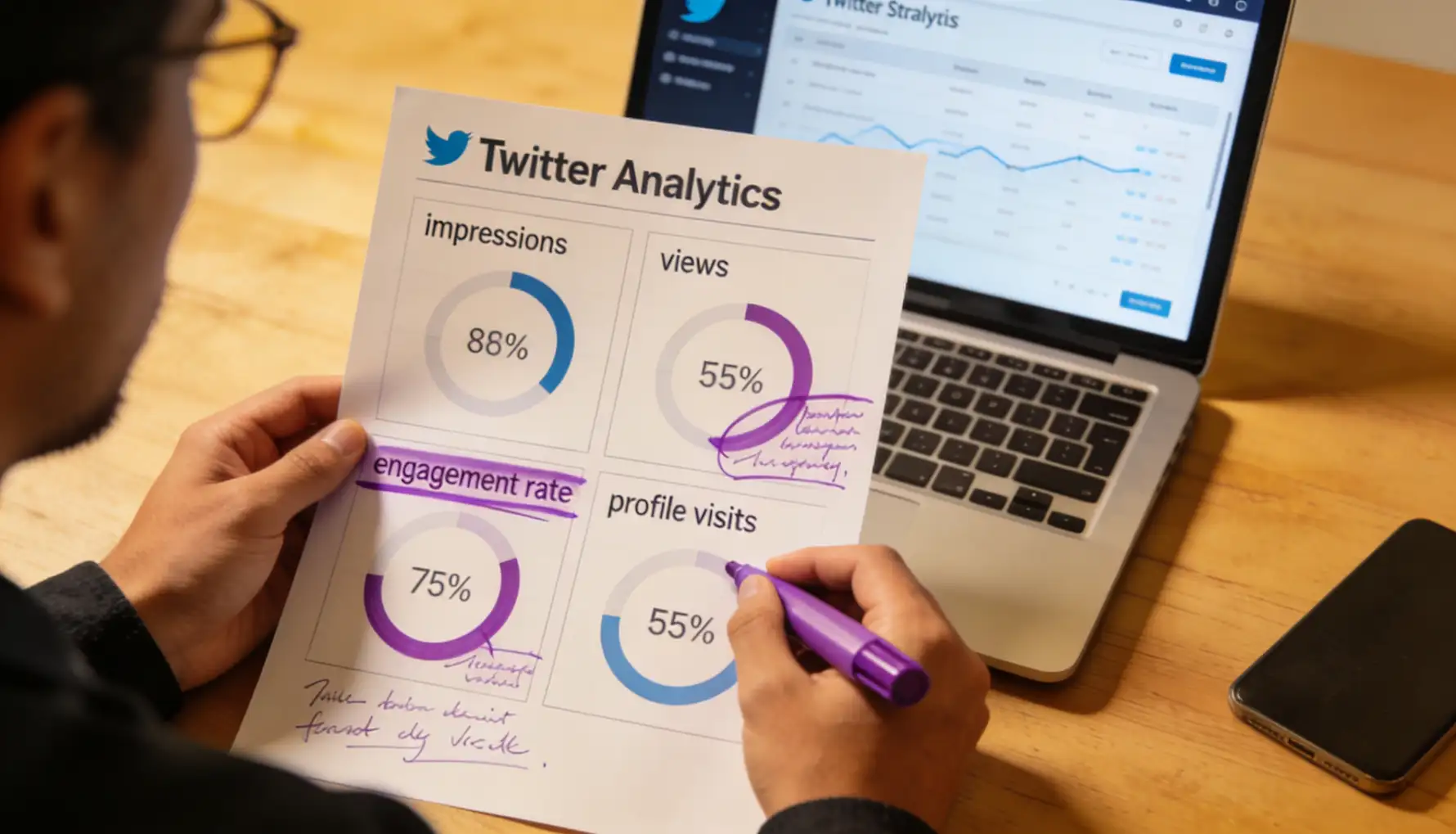
For any tweet you want to analyse, run through four questions in sequence. This transforms your analytics from a passive reporting function into an active content improvement system.
What is the impression count telling me about distribution?
How widely was this tweet served? Was it primarily reaching my existing followers, or did it spread beyond them through algorithmic amplification or retweets? A tweet with very high impressions relative to your follower count got lift somewhere -- worth identifying why so you can replicate it.
What is the views-to-impressions ratio telling me about hook performance?
A ratio above 20-25% is strong -- more than one in four people who encountered this tweet engaged at a reading level. A ratio below 10% suggests the hook isn't converting timeline appearances into genuine stops. If the content of the tweet is genuinely valuable, the hook is the place to experiment first.
What is the engagement-to-views ratio telling me about content resonance?
Of the people who actually read this, how many did something? High views and low engagement suggests the content was consumed but didn't generate a strong enough reaction to motivate action. Review what emotion or utility the tweet was aiming for and whether it actually delivered it.
What is the profile-visits-to-views ratio telling me about audience-building impact?
A tweet can be widely read and still do almost nothing to grow your following if it doesn't make readers curious about who you are. This ratio identifies which of your content is doing the most work toward genuine audience growth versus just generating engagement in isolation.
Impressions tell you about reach. Views tell you about consumption. The gap between them tells you about your hook's effectiveness. The engagement rate beneath the views tells you about your content's resonance. And the profile visits tell you about your content's power to build an actual audience. Read them all, read them together, and read them in the context of what you're actually trying to accomplish. The metrics are a map, not the territory -- but they're a useful map if you know how to read one.
Want to Give Your Best Tweets Broader Distribution?
GetTwitterRetweet.com offers Twitter impressions, retweets, views, and follower services -- quality delivery that gives your content the distribution it needs to generate the engagement signals the algorithm responds to.
Every Signal That Moves Twitter's Distribution Needle
From impressions and reach to follower count and engagement -- the full metric stack for Twitter/X growth