How Spotify Artists Use Playlist Followers to Boost Their Streaming Numbers
There's a conversation that happens in music production communities, artist manager group chats, and indie label Slack channels with surprising regularity — and it almost never gets written about honestly in public.
An artist releases something genuinely good. The production is right. The mix is clean. The song has a real hook and real emotion behind it. They put it on Spotify, share it everywhere, and wait. A week later the stream count is sitting at four hundred. Meanwhile, a song that's objectively less interesting is sitting on a playlist with eighty thousand followers and accumulating streams at a rate that makes no musical sense.
The difference is playlist placement. And the mechanics behind it — how songs get there, what keeps them there, and how follower counts affect everything downstream — is a system serious artists understand and casual ones almost never do.
What playlist followers actually are in Spotify's ecosystem, why they matter more than most streaming guides acknowledge, how artists are using them strategically, and where purchased playlist followers fit into a realistic growth picture for artists tired of releasing good music into a void.
Why Playlists Run Everything on Spotify
To understand why playlist followers matter, you need to understand the role playlists play in how music gets discovered on Spotify — because it's more central than most people outside the industry fully appreciate. Spotify's listening behaviour data is consistent across years of reporting: the majority of streams on the platform come from playlist listening, not from direct artist searches or album plays. When people open Spotify, they overwhelmingly choose a playlist over navigating directly to an artist's catalogue.
This means that for most listeners, most of the time, the discovery of new music happens through playlists. Not through following an artist. Not through searching a genre. Through a playlist that was already waiting for them when they opened the app.
If your music isn't on playlists, it's not being discovered by the majority of Spotify's listener base. It exists, technically, in the catalogue. But it's not being heard. In the streaming economy, music that isn't being heard isn't generating streams, royalties, playlist algorithm recommendations, or any of the downstream benefits that come from momentum on the platform. Getting on playlists is not one growth strategy among several — it is the primary growth pathway on Spotify for independent artists in 2026. Everything else either feeds into or flows from playlist placement.
What Playlist Followers Are — and Why the Number Matters
A playlist follower on Spotify is someone who has saved a playlist to their library and receives updates when new tracks are added. When you follow a playlist, it appears in your library. Spotify's algorithm also uses playlist follow relationships as engagement data — evidence that this playlist provides enough consistent value to a listener that they've committed to it long-term.
Playlist follower count is one of the primary signals Spotify uses when deciding which playlists to surface in search results and when recommending playlists to new users. A playlist with fifty thousand followers appears in search results with far more prominence than a playlist with five hundred followers covering the same territory.
A playlist with more followers gets more algorithmic visibility. More visibility brings more new listeners. More listeners means more streams for the songs on it. More streams build artist streaming metrics. Stronger metrics make those artists more likely to appear in Spotify's own algorithmic playlists — Discover Weekly, Release Radar, Daily Mixes. Algorithmic placement generates even more streams. The playlist follower count is the starting variable in this chain. Every other element follows from it.
Playlist follower count increases
More followers signal to Spotify's algorithm that this playlist has earned discovery placement
Algorithmic visibility grows
Playlist surfaces in search results and listener recommendations for new audiences
New listeners stream songs on the playlist
Real streams accumulate for all featured artists — including yours
Artist streaming metrics strengthen
Save rate, completion rate, and play count data feed into Spotify's recommendation engine
Algorithmic playlist placement earned
Discover Weekly, Release Radar, Daily Mixes — the most powerful distribution on the platform — becomes accessible
How the Spotify Algorithm Reads Playlist Engagement
Spotify's algorithm is more sophisticated in 2026 than when artists first started reverse-engineering it. Understanding how it reads playlist engagement clarifies why follower count matters beyond simple arithmetic.
The algorithm evaluates playlists on multiple dimensions simultaneously. Follower count is one of them. But equally important — and increasingly important as Spotify has refined its systems — are engagement signals that tell the algorithm whether those followers are real listeners.
Save rate is among the most significant. When listeners who encounter a playlist through search or recommendation follow it, Spotify interprets this as a quality signal. A playlist with ten thousand followers acquired through genuine listener discovery has a stronger signal than one that acquired them through a suspicious spike in a short window. The algorithm looks for follow patterns consistent with real listener behaviour — gradual accumulation, geographic diversity, varied listener profiles.
Skip rate on playlist content also feeds into the assessment. A playlist where listeners consistently skip certain songs tells Spotify those songs are a poor fit. A playlist where listeners play through — or replay — tells Spotify the curation is working. Artists benefit directly from landing on playlists where the audience profile matches their sound, because a well-matched audience generates the completion and replay behaviour that Spotify rewards with further recommendation.
The relationship between playlist performance and algorithmic playlist placement — specifically Discover Weekly and Release Radar — is the mechanism that matters most. A song accumulating streams from well-followed playlist placement generates saves, playlist adds, and completion rates that feed into the recommendations engine. Each good streaming week from a well-followed playlist is a week of data investment that makes the next algorithmic recommendation more likely.
The Three Playlist Categories Artists Need to Understand
Not all playlists have equal value for streaming growth, and conflating them leads to misallocated strategy.
Editorial Playlists
Spotify's own curated playlists — RapCaviar, Hot Country, Peaceful Piano, and thousands more. Run by in-house editorial teams. Pitched through Spotify for Artists at least seven days before release. Placement driven by curator decisions, not just algorithm.
Very Hard to GetAlgorithmic Playlists
Discover Weekly, Release Radar, Daily Mixes — Spotify's machine-generated personalised playlists. Cannot be pitched to. Determined entirely by listening behaviour data. Requires generating real streams, saves, and playlist engagement first. These are the reward for good performance, not the starting point.
Earned, Not PitchedIndependent & User Playlists
Created by individual Spotify users — music bloggers, playlist curators, niche enthusiasts. Range from tiny personal playlists to influential community collections with hundreds of thousands of followers. The most accessible entry point for most artists — and where playlist follower strategy matters most acutely.
Most AccessibleThis is where most realistic playlist strategy starts. Finding independent curators in your genre, pitching professionally, building relationships, and getting on their playlists generates the streaming data that eventually feeds into editorial consideration and algorithmic recommendation. And this is precisely where playlist follower counts matter most for the math of your streaming growth.
How Artists Actually Use Playlist Followers Strategically
Building Owned Playlists
Rather than only pursuing placement on other people's playlists, savvy artists create their own — genre playlists, mood playlists, thematic collections that serve genuine listener needs — and include their own music alongside established tracks in the same space. A folk singer-songwriter building a playlist called "Sunday Morning Coffee Songs" attracts followers based on its value to listeners, not based on them being a fan of that specific artist. As the playlist gains followers, those followers are exposed to the artist's own tracks in a context of curation they already trust.
The playlist follower count on an owned playlist is a growth asset the artist controls. As it grows, its algorithmic visibility grows, which brings more followers, which brings more streams for everything on it — including their own tracks. Artists who have built playlists with tens of thousands of followers describe it as a streaming revenue stream that continues generating returns long after the active promotion work is done.
Cross-Promotion With Similar Artists
Two artists at a similar career stage build collaborative playlists featuring both of their music and promote it to their respective followings. Each artist's followers become potential followers for the other artist's music through the playlist context. The playlist follower count grows from both sides, and the streaming benefits compound for both artists. Finding two or three complementary artists for this kind of structured collaboration is one of the highest-leverage activities available to an independent artist on Spotify.
Pitching Independent Curators at Scale
There's an entire ecosystem of playlist curators — some through dedicated platforms, some through direct outreach, some through music blog relationships — who accept pitches from independent artists. The quality and authenticity of these placements varies enormously, but the underlying strategy is consistent: more followers on the playlists your music is on equals more streams for your music. This is a numbers game that requires sustained, systematic effort — not a one-time campaign — to generate consistent placements over time.
The Cold Start Problem — Why Starting From Zero Is Genuinely Hard
Here's the structural challenge every honest conversation about Spotify playlist strategy has to acknowledge: playlist follower counts are subject to exactly the same cold start problem that affects every social platform's growth dynamics.
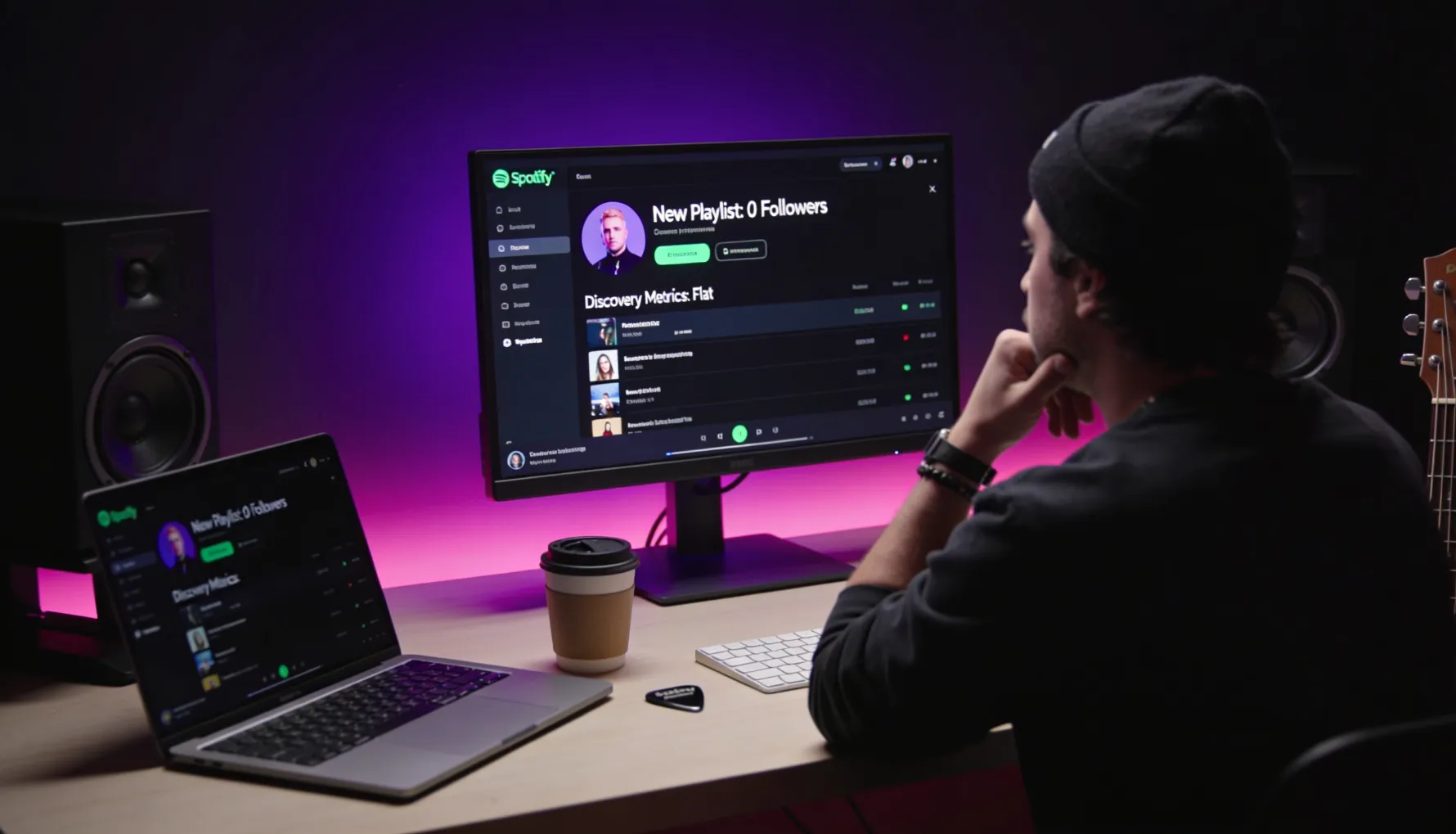
A new playlist with zero followers doesn't appear prominently in Spotify's search results. It doesn't get surfaced in recommendations. It doesn't generate the algorithmic trust signals that tell Spotify this is a playlist worth showing to new listeners. The only people who encounter it are those the playlist owner directly promotes it to — which, for an independent artist, is their existing fan base, precisely the audience they're trying to expand beyond.
The playlist needs followers to get algorithmic visibility. It needs algorithmic visibility to get followers. Without a way to break this loop, even excellent playlist curation can stay invisible indefinitely. This is the specific problem that purchased Spotify playlist followers address — getting a playlist from zero to a credible initial count that generates algorithmic visibility in its niche, so organic discovery can begin. The purchase is solving a starting problem, not a content problem.
What Purchased Playlist Followers Do and Don't Do
Let's be precise, because the value is real but bounded — and understanding the boundaries is what separates a purchase that helps from one that disappoints.
They raise your playlist's follower count to a level that generates credible algorithmic visibility. They provide the social proof signal that tells new visitors who encounter your playlist that other people have found it worth following. They break the zero-visibility loop that prevents good playlists from getting discovered organically. Used correctly, they're the starting condition that makes everything else possible.
They don't generate streams for the songs on your playlist directly. Follower count is not listener count, and a follower who never actually plays the playlist doesn't contribute to streaming royalties, completion rates, or the engagement data that feeds into Spotify's algorithmic recommendation system. The value of purchased followers is specifically in the visibility and social proof functions. The streaming growth that follows depends on organic listeners who discover and actually listen to the playlist because its follower count made it visible.
This means the songs on your playlist need to be genuinely good and well-curated for this strategy to convert. A playlist that achieves follower count visibility and then fails to hold listeners — because the curation is poor, the flow is wrong, or the artist's own music doesn't fit the context — generates a high follow rate and a high skip rate, which sends negative quality signals to Spotify's algorithm. The follower count opens the door. Content quality determines whether anyone stays.
Quality of the purchased followers matters significantly. Follower accounts that look genuine — with listening history, varied geographic origins, realistic profile characteristics — are considerably less likely to trigger Spotify's detection of inauthentic activity. Reputable services like GetTwitterRetweet.com deliver Spotify playlist followers from quality sources with gradual delivery that mimics organic growth patterns.
What Playlist Followers Enable for Spotify for Artists Pitching
There's a dimension to playlist follower counts that goes beyond the algorithmic visibility mechanism — and it matters for artists pursuing editorial placements and PR campaigns.
When you submit music to Spotify for Artists for editorial consideration, the submission includes your artist profile data: monthly listeners, follower count, top markets, streaming trajectory. Curators reviewing submissions are looking at these numbers as context signals. An artist with a playlist they own that has a healthy follower count — alongside their artist page metrics — presents a more credible picture of music industry seriousness than an artist with identical music and zero playlist infrastructure.
The same credibility picture matters when pitching to independent playlist curators. Curators with large, engaged followings receive far more pitches than they can act on. When they investigate an artist who has pitched them, they look at the Spotify profile. An artist with growing monthly listeners, a legitimate artist page, and owned playlists with real follower counts is taken more seriously than an artist with nothing to show outside the track being pitched. Playlist follower counts are therefore also a credibility signal that opens doors beyond the direct algorithmic benefits.
The Streaming Numbers Math — Making It Concrete
per stream (2026 est.)
to earn $1,000
when algorithm trusts you
A playlist with fifty thousand followers that has strong listener engagement could realistically generate several thousand streams per month for a song featured prominently on it — based on a conservative estimate of what percentage of playlist followers are active listeners and what percentage of active sessions include the featured track. Scale to one hundred thousand followers with similarly strong engagement, and the streaming numbers become meaningful at an independent artist revenue level.
The multiplier effect compounds these numbers further. Streams generated through playlist placement feed into Spotify's algorithmic recommendation engines. One strong Discover Weekly cycle can generate more streams in a week than months of manual promotion. This is why playlist follower strategy isn't just a visibility tactic — it's the upstream investment in a streaming revenue engine. The followers on your playlists today are, indirectly, the streams and royalties and algorithmic recommendations of next quarter.
Building Your Playlist Strategy: What the First 60 Days Should Look Like
Theory is only useful when it changes what you actually do. Here's a concrete, staged approach for artists who want to use playlist strategy intentionally.
Spend time listening to playlists in your genre — identify the mood, tempo, and sonic characteristics that connect them. Create your own playlist that serves a genuine listener need, not just a vehicle for your music. A playlist called "Late Night Indie Rock for Insomniacs" is more followable than "Songs by [Your Name]." Build it to 25–40 tracks with your music placed naturally in the flow. The curation should feel like something you'd actually want to listen to.
Share the playlist with your existing audience on social media and email. Contact 3–5 independent playlist curators in your genre with a professional pitch — not a form letter, a genuine note about why your music fits their audience. If you're considering a purchased follower boost to build initial algorithmic visibility, this is the time to evaluate quality services and proceed with clear expectations about what the boost accomplishes and doesn't.
Monitor your Spotify for Artists data carefully — playlist follower trajectory, streams from playlist sources, monthly listener movement. Submit your next release to Spotify for Artists editorial consideration with the playlist as part of your artist story. Continue curator outreach. This is a numbers game that requires sustained effort. By week eight, you should have a playlist with growing followers, at least 2–3 curator placements, and enough streaming data to identify which of your tracks resonates most.
FAQ: Spotify Playlist Followers and Streaming Growth
The Honest Picture
Spotify's streaming economy is not a meritocracy in the simple sense that the best music automatically rises to the top. If it were, this guide wouldn't need to exist. The quality of your music is necessary but not sufficient. The infrastructure around it — where it lives, who has access to it, how many people that infrastructure reaches — determines whether anyone ever encounters it.
Playlist followers are one part of that infrastructure. Not the whole story. Not a substitute for genuine music quality, professional release strategy, or sustained artist development. But a real, meaningful lever in a system where leverage matters enormously and artists without it are working three times as hard for a fraction of the results.
The artists who understand this aren't gaming the system. They're understanding how the system actually works and choosing to work with it intelligently rather than against it out of principle. Every major label has understood Spotify playlist strategy since the platform's early days. Independent artists who understand and apply the same principles — thoughtfully, with quality content underneath the strategy — are simply competing on a more level playing field.
Build something worth listening to. Then build the infrastructure that makes sure people actually hear it. Those two things together are what sustainable Spotify growth actually looks like.
Ready to Give Your Spotify Playlists the Follower Foundation They Need?
GetTwitterRetweet.com offers Spotify playlist follower services — gradual delivery, quality accounts, and transparent service descriptions that tell you exactly what you're getting and what it's designed to accomplish.
Complete Your Spotify Growth Strategy
Every signal that helps your playlists get discovered and your tracks accumulate the streams that feed Spotify's recommendation engine