How to Get Your First 1,000 YouTube Subscribers Faster
Table of Contents
Everyone who's ever started a YouTube channel knows the specific kind of misery that is zero subscribers. You spend two hours filming. Another hour editing. You hit publish and refresh the analytics page every twenty minutes. By the end of the day, you have four views — two of which are you checking if it loaded correctly — and your subscriber count hasn't moved.
The first 1,000 subscribers is the hardest milestone on YouTube. Not because the platform is broken, and not because your content is necessarily bad. It's hard because YouTube is a compounding game, and compounding doesn't do anything visible in the early stages. You're putting in work that won't pay off for weeks or months, with almost no feedback signal telling you you're on the right track.
Not the recycled advice that tells you to "post consistently" without explaining what that means in practice. The honest version: what actually moves the needle, what's wasting your time, and the six mistakes that make the process two or three times slower than it needs to be.
The 1,000 Subscriber Wall Is a Psychology Problem as Much as a Strategy Problem

Most channels that never reach 1,000 subscribers don't fail because of bad content. They fail because the creator quits somewhere between video five and video fifteen. That's not a criticism — it's rational behaviour when you look at the incentive structure. You're producing content, investing real time and energy, and getting almost nothing back. No monetisation. Tiny audience. Minimal feedback. The platform isn't showing your videos to anyone meaningful because you haven't proven yourself yet.
Understanding this upfront changes your approach. The goal of your first twenty videos isn't to go viral. It isn't to be perfect. It's to stay in the game long enough for your decisions to compound. Every creator who has ever hit 100,000 subscribers passed through 1,000 subscribers first — and most of them will tell you the first thousand was disproportionately difficult compared to everything that came after.
Set a commitment before you start. Decide you're publishing thirty videos regardless of results. This removes the quit decision from the equation and lets you focus on improving instead of measuring. Thirty videos with honest effort and iteration will teach you more about your channel than any guide.
Niche Specificity Is Worth More Than Production Quality
YouTube is a search and recommendation engine before it's a social platform. The algorithm's job is to connect viewers with content they want to watch. Your job is to make it as easy as possible for the algorithm to understand what your channel is about and who it's for.
Channel Type Algorithm Problem Growth Speed Broad Slow Cooking + travel + tech + motivation — four different audiences, nothing to categorise Very slow. Algorithm can't build consistent audience. Narrow Faster Budget meal prep for college students — one audience, clear relevance, easy to recommend Faster. Algorithm knows exactly who to show it to.Narrow channels grow faster in the early stage. A channel specifically about mechanical keyboard reviews under $100, or hiking trails in the Pacific Northwest, or beginner watercolour painting is easy for YouTube to categorise and recommend. The audience is clearly defined. The algorithm can do its job. You don't need to stay narrow forever — but in the 0-to-1,000 phase, specificity is the fastest path to getting YouTube's recommendation engine working for you instead of against you.
The Thumbnail and Title Are the Actual Product
Most new creators spend 95% of their effort on the video itself and almost no time on the thumbnail and title. This is backwards.
The video is what keeps subscribers. The thumbnail and title are what gets the click that makes the subscriber possible. No click means no view. No view means no subscriber. The best video in your niche sitting behind a weak thumbnail and vague title will underperform a mediocre video with a compelling thumbnail and a specific, curiosity-driving title.
What a Strong Thumbnail Does
One thing: it creates a reason to click over everything else on the screen. High contrast. A clear focal point. An emotion visible on a face, if there's a face. Text that adds information the image alone doesn't give. Readable at thumbnail size, not just when zoomed in. Spend at least twenty minutes on your thumbnail — it deserves more of your time than your intro.
What a Strong Title Does
Promises something specific. "How I saved $400 on my first mechanical keyboard build" outperforms "My Keyboard Build" by a factor most new creators can't fathom. "The meal prep mistake costing you two extra hours per week" gets clicked. "Weekly meal prep tips" doesn't. The specificity signals value before anyone watches a single second. Test multiple title options before publishing.
Specific outcome + timeframe or constraint + implied tension. "How I cut my electric bill 40% in one month without turning anything off" beats "Tips for lowering your electric bill" every time. The specific claim creates a question the viewer needs answered.
Searchable Topics Beat Interesting Topics in the Early Stage
You might have genuinely interesting opinions and ideas. That's great — and it matters a lot once you have an audience. But in the zero-to-1,000 phase, interesting doesn't drive discovery. Search volume does.
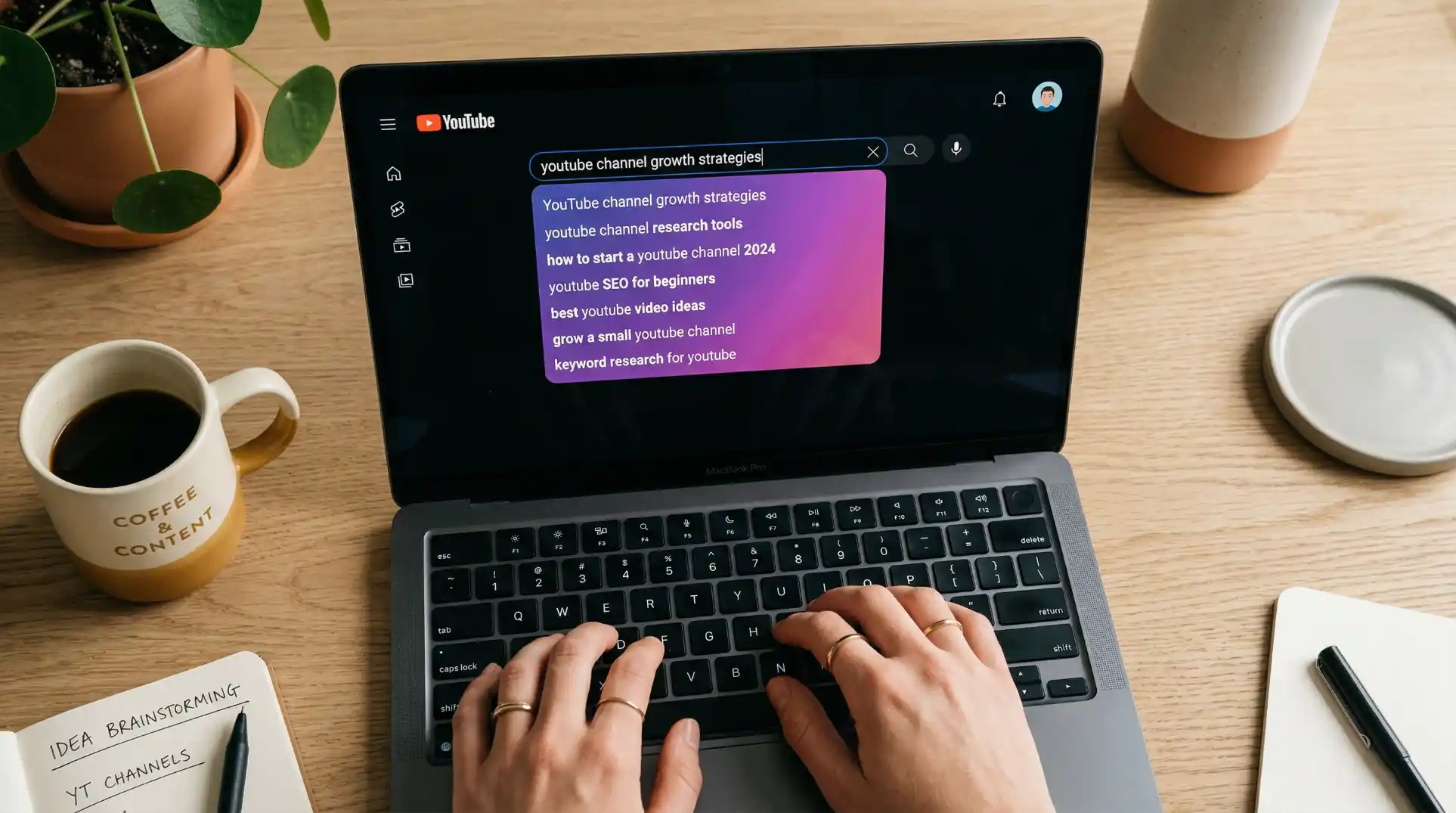
New channels have no subscriber base to notify and no algorithm trust to generate recommendations. The only reliable traffic source at this stage is search. Someone types a question into YouTube. Your video answers that question. They watch, they like it, they subscribe.
This means your early video strategy should be driven by what people are actively searching for in your niche. Use YouTube's autocomplete — start typing a topic and see what YouTube suggests — to find real search queries. Look at what videos in your niche already perform well and what questions they leave unanswered. Make videos that answer specific questions with the exact phrasing people use to search for them.
It's about prioritising discoverability while your channel is invisible to the algorithm. Once you have 1,000 subscribers and some watch history to analyse, you can start making content driven more by your own creative instincts. Early stage, serve the search bar. Later stage, serve your vision.
Your First Ten Seconds Determine If You Get a Subscriber or a Bounce
YouTube's algorithm tracks audience retention closely. A video that loses 60% of viewers in the first thirty seconds tells the algorithm something is wrong — and it stops recommending that video. A video that holds viewers through the first minute signals quality, and recommendations increase.
The first ten seconds of your video are the highest-stakes ten seconds in your production. Most new creators waste them on long intros, "Welcome back to the channel," a thirty-second ramble about what the video is going to cover, channel logos and music beds. All of this is friction between a new viewer and the reason they clicked.
Cut All of It
Start with the most compelling version of your video's premise. If the video is "how I lowered my electric bill by 40%," your first line should be something like: "This month my electric bill was $67. Last month it was $112. I changed three things. Here's exactly what they were." The viewer knows immediately they're in the right place, the value is real, and they have a reason to keep watching.
You earn the right to a slower pace and longer intros after someone trusts your channel. In the zero-subscriber phase, respect the click. Every second of intro you add is a second a new viewer might bounce — and that bounce hurts your retention rate, which hurts your recommendations, which hurts your growth.
The End Screen and Subscribe Prompt Are Not Optional
You've done the hard part — someone watched your video. Now the conversion to subscriber depends almost entirely on whether you explicitly ask for it and make it easy.
Most new creators are vague or passive about the subscribe ask. "If you enjoyed this, maybe hit subscribe" gets ignored. A specific, value-framed ask works better: "If you want to see the follow-up where I actually try to cut the bill below $50, subscribe so you don't miss it." You've given a concrete reason tied to something they already proved they're interested in.
Use Every Second of Your End Screen
YouTube gives you the final twenty seconds of every video to display end screen elements — a subscribe button, links to other videos, playlist cards. Use all of it. A viewer who just finished one video and gets visually prompted toward another is far more likely to stay in your channel ecosystem and convert to a subscriber during that session. These aren't vanity tactics. They're the conversion layer that turns a view into a subscriber, and they take five minutes to set up properly.
Strategic Early Momentum — Where Buying Subscribers Fits In
YouTube has its own cold start problem: new channels get deprioritised in search and recommendations until they show engagement signals. This creates a loop — you need views to get recommended, but you need to be recommended to get views.
Some creators choose to give their early channel a credibility signal by buying subscribers through a service like GetTwitterRetweet.com. The logic is straightforward: a channel sitting at 12 subscribers and a channel sitting at 800 subscribers receive different treatment from new viewers, and potentially different treatment from the algorithm. Social proof influences click-through rates even before someone watches a second of your content.
Purchased subscribers are a starting signal, not a strategy. They don't watch your videos, which means they don't contribute to watch time or retention — the metrics that actually drive YouTube recommendations. A channel with 800 subscribers and 3% average view duration isn't going to grow from purchased numbers alone.
Where it makes sense is as a credibility bridge — getting a channel past the "zero" stage visually while organic content strategy does the actual growth work. Used this way, at reasonable scale, it removes one of the psychological friction points that causes creators to quit before the organic compounding starts working. The content, the thumbnails, the titles, the search strategy — those are what actually build a YouTube channel. A subscriber count that doesn't look abandoned is simply one less barrier to getting someone to click.
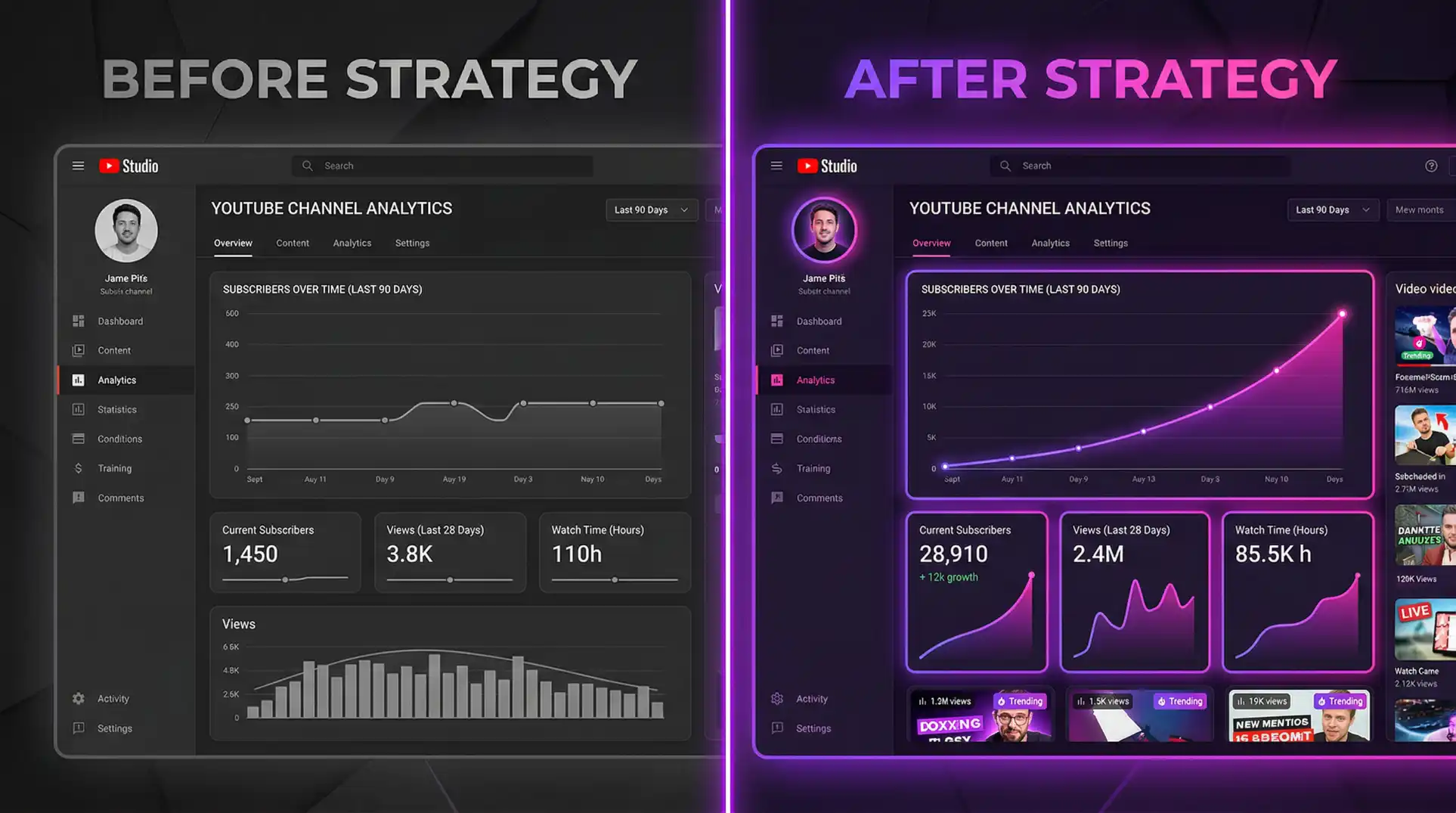
The Six Mistakes Slowing You Down
Fix these and the path to 1,000 subscribers gets significantly shorter. Most new creators make all of them simultaneously.
A channel that posts multiple unrelated content types gives YouTube nothing to categorise. You need one clear audience for the algorithm to build momentum with.
If your thumbnail doesn't create a reason to click over everything else on the page, the video doesn't exist. No click, no view, no subscriber.
"My morning routine" gets ignored. "The 6 AM routine that finally got me to the gym 5 days a week" gets clicked. Specificity signals value before a single second is watched.
Interesting ideas don't drive discovery when you have no audience. Real search queries do. Early videos should be built around what people are actively typing into YouTube.
Long intros, welcome-backs, and premise ramblings kill retention. A new viewer who bounces in the first ten seconds tells the algorithm your content isn't worth recommending.
The compounding effect of YouTube growth is real but invisible in the first fifteen videos. Most creators quit before it becomes visible.
FAQ: Getting to 1,000 YouTube Subscribers
The Short Answer Nobody Likes
There's no trick that gets you to 1,000 subscribers without making videos people actually want to watch. But there are mistakes that make the process two or three times slower than it needs to be — and most new creators make all of them at once.
Broad niche. Weak thumbnails. Vague titles. No search strategy. Slow intros. Passive subscribe asks. Quitting before the compounding starts. Fix those six things, commit to thirty videos before you evaluate results, and 1,000 subscribers stops being a distant milestone and starts being a matter of when.
The creators who make it aren't usually more talented. They're just still posting when everyone else stopped. Compounding only works when you stay in the game long enough for it to become visible. The first 1,000 subscribers is the proof that you will. Everything after that gets easier — but only if you get there first.
Ready to Give Your Channel the Early Momentum It Needs?
GetTwitterRetweet.com offers YouTube subscriber services to help new channels establish baseline credibility — real, gradual delivery that complements your content strategy, not a replacement for it.
Complete Your YouTube Growth Strategy
Every engagement signal that helps your content get recommended and your channel get taken seriously