How the TikTok Algorithm Works — and How to Use It to Your Advantage
Table of Contents
There's a version of this conversation that gets recycled constantly on YouTube tutorials and creator forums, and it goes something like this: the TikTok algorithm is a black box that randomly blesses some creators with millions of views and leaves everyone else to post into the void.
That version is wrong. And believing it is one of the most expensive mistakes you can make as a creator.
The TikTok algorithm isn't mysterious. It's one of the most well-documented, logically consistent recommendation systems in social media. TikTok has published information about how it works. Researchers have studied it extensively. And thousands of creators have stress-tested it enough that the patterns are now genuinely clear.
At its core, TikTok's algorithm is trying to predict whether a specific person will enjoy a specific video. That's it. It's a matchmaking engine between content and viewers. Once you understand that, you stop trying to "beat" it and start trying to work with it. The difference between those two approaches is the difference between creators who grow and creators who stall.
The For You Page Isn't Random
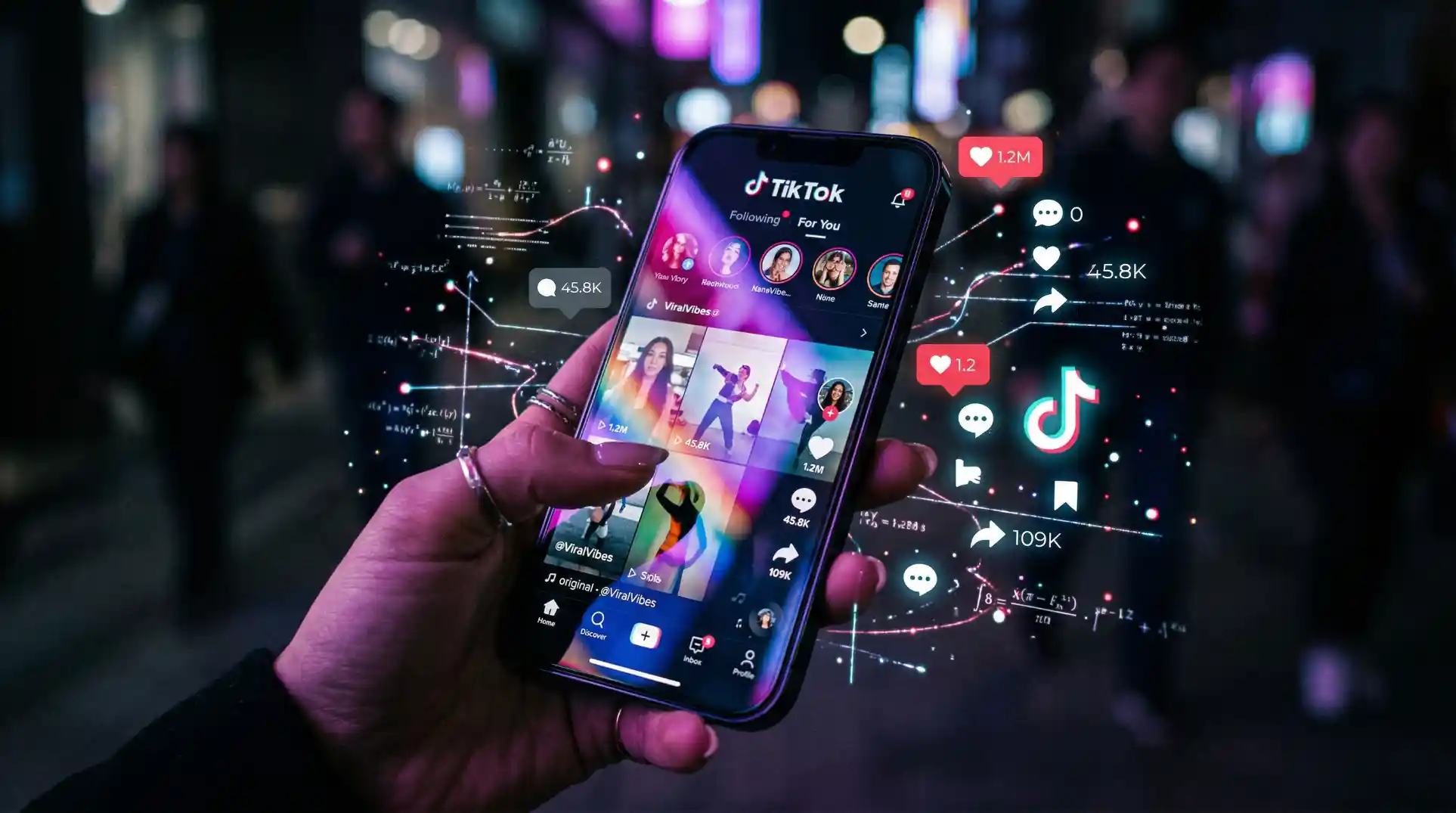
When you open TikTok, the For You Page feels almost eerily personalised. Somehow it knows you're into mechanical watches, true crime podcasts, and cottage-core cooking. Nobody told it that. You never filled out a preference form. And yet here you are, three hours later, completely absorbed.
That experience isn't accidental, and it isn't magic. It's the result of an incredibly dense signal collection happening in real time, every time you interact with the app. TikTok is constantly reading your behaviour — not just what you like or share, but how long you watch, whether you rewatch, whether you scroll away after two seconds, whether you visit the creator's profile, whether you read the comments, whether you turn the sound on.
Every micro-behaviour feeds into a continuously updating model of what you want to see next. The practical implication for creators is enormous: getting someone to hit the like button is far less important than getting them to watch 80% of your video. Getting a share is worth less than someone replaying your content twice in a row. The algorithm is watching behaviour, not just declared preferences.
The Initial Test — Where Every Video's Fate Is Decided
Here is the mechanism that most creators don't fully understand, and it's the one that matters most.
When you publish a video on TikTok, it doesn't immediately go to your full follower base or get pushed to millions of people. Instead, TikTok shows it to a small test group — typically a few hundred to a few thousand users. These aren't random people. They're users whose profiles suggest they might be interested in your content, based on what TikTok knows about them and what it knows about your previous content.
What happens next determines everything. TikTok measures how that initial test group responds. Are they watching the whole thing? Are they rewatching? Are they sharing it? Are they commenting? Are they leaving after the first three seconds? Based on those signals, the algorithm makes a decision: push this content to a larger audience, or don't.
If the video performs well in the first test group, it gets shown to a bigger group. If it performs well there, an even bigger group. This can happen very quickly — a video that connects strongly can go from a few hundred views to a million in a matter of hours. But if it flatlines with the first test group, it typically stays there. Most videos do.
This is why chasing follower count misses the point. TikTok's algorithm doesn't heavily weight follower count when deciding who sees your content. What it weights is engagement signals from each new test group. You could have 200 followers and a video that reaches 500,000 people if the engagement signals are strong enough. You could have 200,000 followers and a video that reaches almost nobody if the test group engagement is weak. The algorithm is genuinely democratic in this sense — it gives small accounts a real shot because it's optimising for viewer experience, not creator status.
What TikTok Actually Measures — and What It Ignores
Understanding the specific signals TikTok weighs heavily versus the ones it mostly ignores is where this knowledge becomes practically useful.
Signal Weight Why It Matters Watch time % / Completion rate Very High Primary proxy for content quality. High completion tells the algorithm viewers found it worth finishing. Replays Very High Strongest quality signal. A rewatch tells TikTok the content was genuinely compelling — distribution expands significantly. Shares High Distribution multiplier. Each share opens a new test group and brings in better-matched viewers. Comments High Requires active effort, signals emotional engagement. Conversation is a strong proxy for content quality. Follows from new viewers Medium Indicates the content resonated enough to convert a stranger into a follower. Profile visits Medium Shows the viewer wanted to know more — a positive engagement extension signal. Likes Lower Counts, but weaker than behavioural signals. Easy to give without genuine engagement. Follower count Low Barely weighted in distribution decisions. New accounts can compete with large ones.Replays deserve special attention. Creating content with a reason to rewatch — a visual detail viewers might miss the first time, a punchline that lands harder on the second viewing, or practical information dense enough to warrant review — is one of the more sophisticated strategies available to serious creators. It's also why content with a genuine point of view tends to outperform neutral, purely informational content even when the informational content is more technically useful. The algorithm can't measure how helpful your advice was. It can measure whether someone watched twice.
The Sound Layer — Why Audio Matters More Than You Think
TikTok was built on music. The platform's original identity was a lip-sync app, and while it's evolved far beyond that, audio remains deeply embedded in how the algorithm functions.
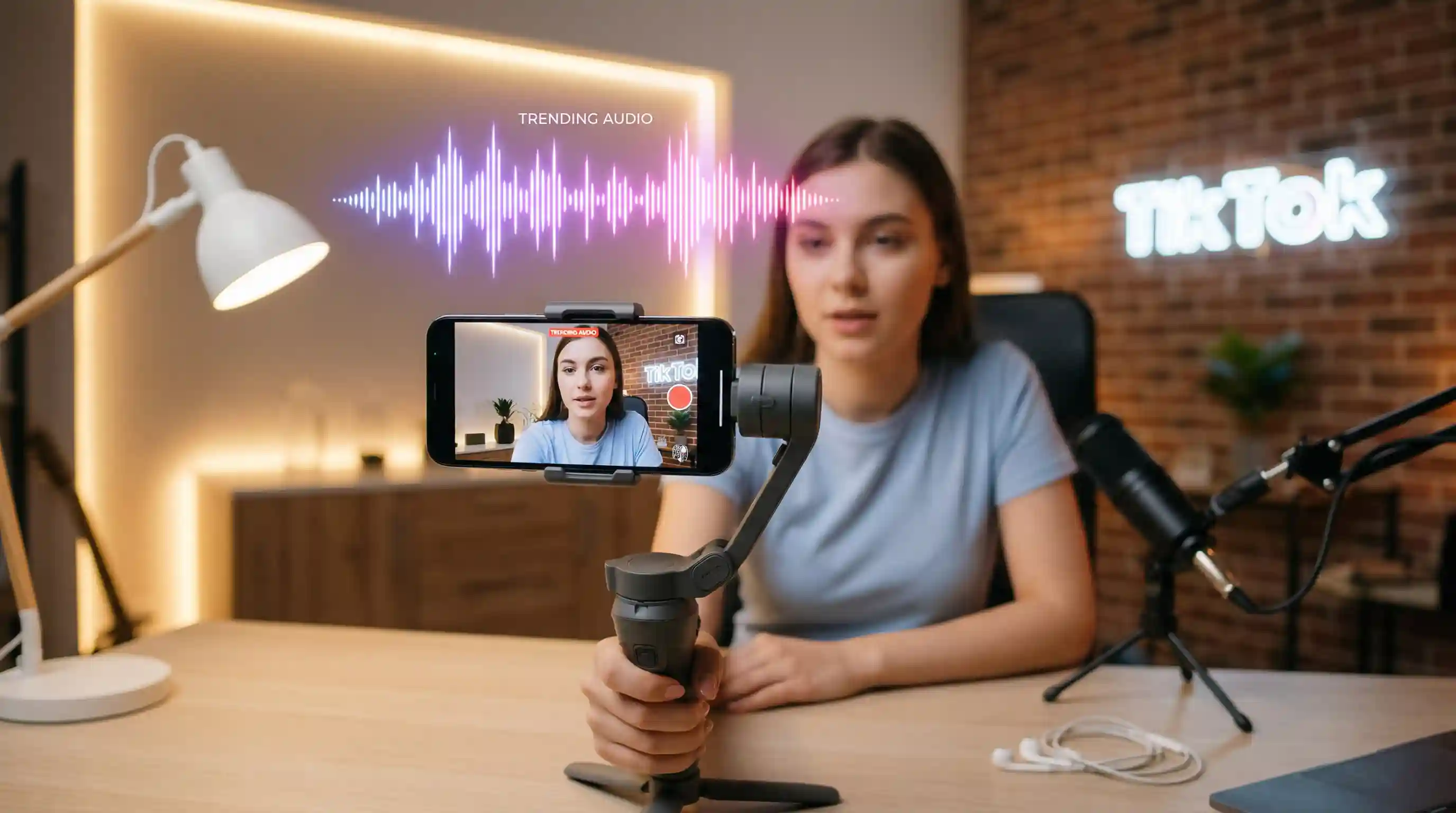
Trending sounds create their own distribution ecosystem. When a sound is trending, TikTok actively connects creators who use that sound — meaning your video enters a pre-existing recommendation pipeline with established momentum. Viewers who liked other videos using that sound are more likely to be shown yours. The test groups TikTok assigns to your video will already have demonstrated interest in that audio context, which gives your initial engagement metrics a better starting baseline.
This is particularly useful for new accounts and small creators. Using a sound in its early trending phase — day two or three of a trend, before it peaks — can put a small account's video in front of hundreds of thousands of viewers who would otherwise never encounter that creator. It's one of the fastest organic growth levers available on the platform.
If your original audio goes viral — if other creators start using a sound you made — TikTok surfaces your original video every time someone views a video using your sound. This can create a long tail of ongoing traffic that continues driving views and followers months after the original post. Building a recognisable audio identity is a legitimate long-term strategy.
The practical takeaway: never post a video without deliberate audio consideration. Trending audio isn't mandatory, but it should always be evaluated. If your content type suits it, matching to a trending sound in its early phase is one of the highest-leverage decisions you can make at the point of upload.
Hashtags — Useful but Overstated
Hashtags on TikTok do not function the way they do on Instagram or Twitter. They matter, but not in the way most creators use them. TikTok's algorithm primarily categorises content through video analysis — what's visually in the frame, spoken words, captions, and audio — rather than through hashtags. The days when stuffing a caption with twenty hashtags could meaningfully drive discovery are gone.
What hashtags actually do on TikTok today: they help the algorithm confirm the topic category of your content, which marginally improves early test group accuracy. They also allow some users to browse content by category, though this is a relatively small traffic source compared to the For You Page.
Use two to five relevant hashtags that accurately describe the topic and audience. Avoid stuffing. Avoid generic hashtags like #fyp or #viral — there's no evidence these improve performance. Specific niche hashtags (think #vanlifecooking rather than #food) tend to outperform broad ones because they help the algorithm select better-matched test groups. Trending hashtags that genuinely relate to your content are worth using. Trending hashtags that don't relate to your content can confuse the algorithm's categorisation and send your video to less-engaged test groups.
Timing and Consistency — The Reality
The internet is full of articles confidently declaring the "best times to post on TikTok" with very specific windows listed by day. Tuesday at 9 AM. Friday at 5 PM. These articles largely miss the point. The algorithm's initial test group is drawn from your existing audience and adjacent viewers — people who exist across time zones. The idea that a specific posting window universally improves performance oversimplifies a much more complex system.
What matters is not a universal best time, but your specific audience's active hours. TikTok's Creator Tools provides follower activity data showing when your specific audience is most active on the platform. This data is far more valuable than any generic best-times article. Post when your audience is active, and your initial engagement window will be stronger.
Posting consistently helps TikTok's algorithm build a more accurate content profile for your account, which improves the accuracy of the test groups it assigns to your new videos. An account with sixty consistent videos in one niche will get much better initial test group selection than a new account with three videos. Consistency builds algorithmic trust — and that trust compounds over time in ways that are genuinely visible in performance data.
That said, consistent low-quality content is worse than inconsistent high-quality content. Multiple consecutive videos with poor completion rates will signal to TikTok that your content isn't satisfying viewers, and subsequent videos will receive lower-quality initial test groups as a result.
The Hook Is Not Optional
Every piece of advice about the TikTok algorithm eventually leads here, and with good reason: the first two to three seconds of a video determine whether the rest of the algorithm conversation is even relevant.
TikTok's average scroll time — the speed at which users swipe past content they're not engaged by — is among the fastest of any social platform. If you don't stop the scroll in the first two seconds, the viewer is gone. And a viewer who leaves in the first two seconds sends the algorithm a strong negative signal about your content.
The Hook vs. The Intro
The hook is not the intro. The hook is the reason to stop scrolling. It should be doing exactly one of the following things: promising a specific, compelling outcome the viewer wants to know; presenting something visually unexpected or attention-commanding; triggering an emotional response strong enough to override the scroll impulse; or creating a question the viewer needs to hear answered.
Type Example Result Intro Weak "Here are five things about budgeting..." Low retention. Viewer scrolls. Algorithm notes early drop. Hook Strong "I was $40,000 in debt and paid it off in 18 months without a second job — here's the exact method." High retention. Viewer stays. Algorithm expands distribution.Strong hooks improve the algorithm's trajectory for your video because they increase the proportion of viewers who make it past the critical early-drop threshold. If most viewers watch past the three-second mark, TikTok interprets this as a high-quality signal during the initial test — which expands distribution, which generates more impressions, which means more eventual engagement. The hook is where the compounding starts.
Niche Consistency and the Content Profile Problem
One of the less discussed but genuinely important aspects of the TikTok algorithm is how it builds what you might call your content profile — its understanding of what your account is about and who it serves. This profile determines the quality of your initial test groups.
An account with a clear, consistent niche gets assigned test groups filled with viewers who have demonstrated interest in that specific niche. An account that posts about cooking, then travel, then fitness, then opinion takes is algorithmically ambiguous. When you post a new cooking video, TikTok isn't sure whether to assign it to the cooking-interested test group or the travel-interested test group or neither. The result is lower-quality test group selection, which produces lower initial engagement, which limits distribution.
It's about the compounding advantage of clarity in the early growth phase. Accounts that establish a clear content identity faster get better algorithmic treatment sooner. Once your content profile is strong and your account has genuine algorithmic momentum, you have much more latitude to explore adjacent topics. But in the 0-to-10,000 follower phase, coherence compounds faster than variety.
What Happens When a Video Underperforms
Not every video is going to hit. Understanding how to interpret underperformance is as important as understanding how to set up success.
A video that underperforms in the initial test group is not necessarily a bad video. The test group selection might have been imperfect. The timing might have been off. The thumbnail frame might have been weak. The first three seconds might have lost viewers before the best part of the content. Many videos that flopped initially have been reuploaded with adjustments to the thumbnail, opening line, or audio and performed significantly better the second time.
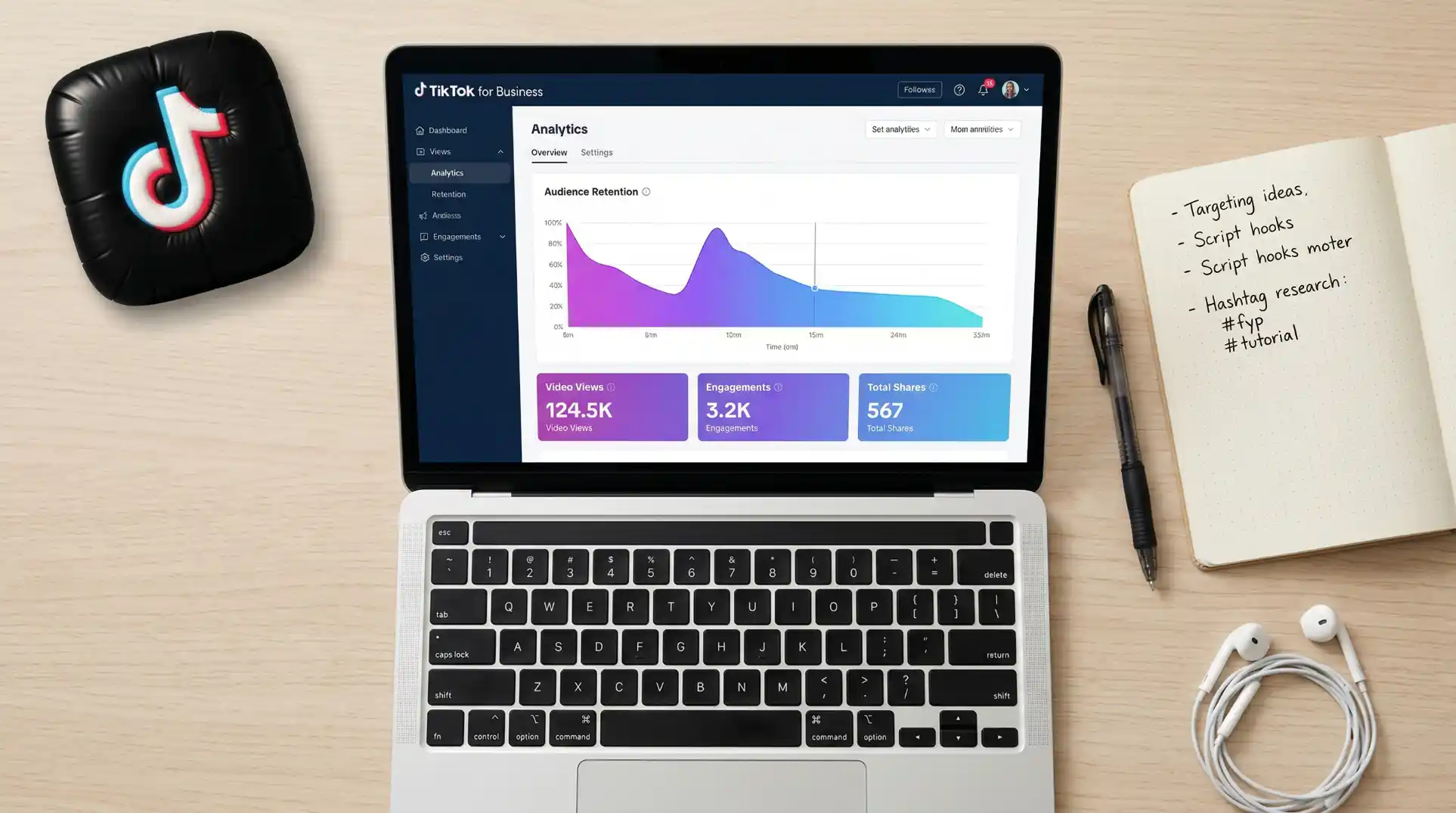
What underperformance does tell you is something specific about which element didn't work. Losing viewers in the first three seconds means the hook needs work. Viewers watching 60% and dropping off means the content loses them at a specific point — look at the retention graph in analytics. Strong completion rate but low shares means the content was watched but not felt as worth passing on — it likely needs a stronger emotional or utility angle.
The algorithm is the most honest feedback mechanism available to a creator. It doesn't lie. It doesn't have feelings about your effort. It shows you what's working and what isn't with extraordinary precision — if you know how to read it. Every underperforming video is a data point. Every strong completion rate is a signal to replicate. Every share tells you something about what your audience found worth passing on.
The GTR Socials Honest Take on Manufactured Momentum
Any honest discussion about the TikTok algorithm has to address the role of early engagement services, because it's a real part of how some creators navigate the cold start problem.
The cold start problem on TikTok is genuine. New accounts with no history get lower-quality initial test groups. The algorithm has no data to work with, so it uses broad, less-targeted sampling. This means even good content from new accounts sometimes struggles simply because the initial test group wasn't well-matched to the content.
Some creators address this by using third-party services through GetTwitterRetweet.com to give early videos an initial boost — improving view counts, early engagement signals, and follower baselines to help the algorithm build a clearer content profile faster. When used responsibly and in combination with genuine content quality, this approach can shorten the bootstrapping period.
Bought engagement on weak content is a waste of money and, more importantly, a waste of algorithmic momentum. The algorithm doesn't distinguish between purchased and organic views at the signal level — but it absolutely distinguishes between content that holds viewer attention and content that doesn't. Fake early engagement followed by poor organic retention will confuse and ultimately degrade your content profile.
Used correctly — to give quality content a stronger initial test window and to build baseline credibility for new accounts — early momentum services can be one tool in a broader, genuine growth strategy. They are not a substitute for hooks, niche clarity, strong audio choices, or consistent quality. They're a mechanism for getting that quality content in front of better-matched audiences, faster.
FAQ: How the TikTok Algorithm Works
The Short Answer Nobody Wants to Hear
The TikTok algorithm rewards content that viewers actually want to watch. That's the whole thing. Everything else — the hook mechanics, the audio strategy, the posting timing, the niche clarity, the hashtag approach — is in service of that single outcome.
The creators who figure this out stop thinking about the algorithm as an obstacle and start thinking about it as information. Every underperforming video is a data point. Every strong completion rate is a signal to replicate. Every share tells you something about what your audience found worth passing on.
TikTok's algorithm is one of the most creator-friendly systems in social media — because it's designed to surface quality content regardless of account size, posting history, or follower count. The playing field is more level here than on almost any other major platform. A small account with a strong hook, a clear niche, and content that earns replays will be shown to millions of people.
The algorithm is not the barrier. The work is the barrier. The algorithm is actually on your side — it just needs you to give it something worth showing people. Do that, and the rest follows.
Ready to Give Your TikTok Content the Early Momentum It Needs?
GetTwitterRetweet.com helps creators break through the cold start barrier — real engagement signals that help quality content reach better-matched audiences, faster.
Complete Your TikTok Growth Strategy
Every engagement signal that helps your content clear TikTok's initial distribution threshold