Buy YouTube Watch Hours: Everything You Need to Know Before You Start
Table of Contents
There's a specific kind of exhaustion that comes with being close to YouTube monetization but not quite there. You've put in the work. You've figured out your niche, found your voice, learned to edit, studied thumbnails, published consistently. Your subscriber count is moving. The comments section has actual people in it saying actual things. By any reasonable measure, you're building something real.
And then you look at your watch hours dashboard and do the math.
The honest version of the watch hours conversation — not the inflated promises, not the scare tactics. Everything you need to know before making a decision: what watch hours are and why they matter, how purchased watch hours work, where the real risks live, what separates services that help from services that hurt, and how to think about this as part of a strategy rather than a standalone solution.
Why Watch Hours Exist as a Requirement in the First Place
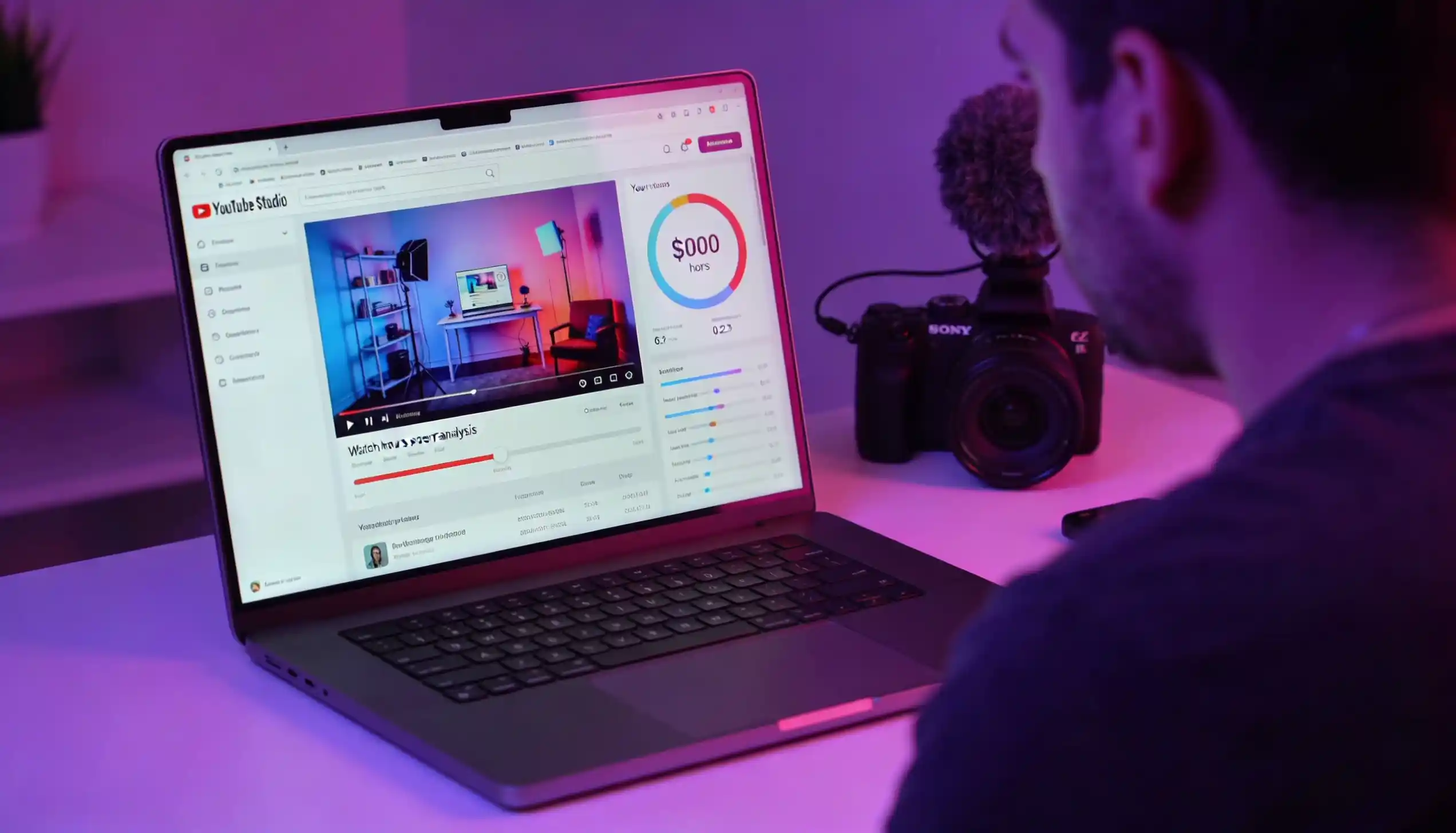
Understanding why YouTube set the 4,000 watch hour threshold helps you understand what you're actually navigating — and why the method you use to reach it matters so much. YouTube introduced the watch hour requirement as part of a broader monetization policy overhaul in 2018, alongside the 1,000 subscriber minimum. Before these requirements existed, the YouTube Partner Program was accessible to essentially any channel, which created significant problems: low-quality channels and occasionally harmful material were monetizing on the platform, damaging the ecosystem for serious creators and making YouTube less attractive to advertisers.
The watch hour requirement serves as a quality filter. If real people have genuinely watched 4,000 hours of content on your channel, that's meaningful evidence your channel provides something worth watching. It's not a perfect filter, but it's a substantially better proxy for channel viability than subscriber count alone — because watch hours are harder to game convincingly than subscriber numbers.
This context tells you exactly what YouTube is looking for when it reviews monetization applications: evidence that your watch hours represent real viewer engagement. An application supported by hours from genuine, varied viewing looks completely different to reviewers than one supported by suspicious patterns that don't resemble real human viewing behaviour. The requirement is a quality signal. The way you reach it determines whether it communicates that signal correctly.
The Monetization Math — and Why Creators Get Stuck
Before going further, here's why the 4,000-hour threshold is so specifically difficult for channels in the growth phase. The difficulty is mathematical, not just motivational.
For a channel with 500 subscribers and videos averaging 200–400 views each, that math takes a long time to resolve. Even posting weekly with improving view counts, the compound accumulation of watch hours can lag months behind what your current trajectory feels like it deserves.
YouTube's monetization window requires the 4,000 hours and 1,000 subscribers to be accumulated within the last 365 days — not lifetime totals. A channel that hit 3,500 hours eight months ago and then had a slow quarter can find itself watching early hours drop out of the calculation window while new hours aren't accruing fast enough to compensate. This specific scenario is where creators start seriously evaluating purchased watch hours. The channel is real, the content is real — but the metric is moving too slowly and some hours are aging out before new ones replace them.
What Purchasing Watch Hours Actually Means
Let's be precise about what happens when you buy watch hours, because clarity here is the foundation of making a good decision.
When you purchase watch hours, the service directs real or real-looking traffic to your YouTube videos, generating watch time that accumulates in your channel's analytics. The quality and source of this traffic varies dramatically between providers — which is the most important variable in this entire conversation.
What you are buying is watch time accumulation — specifically and narrowly the metric — in a way that moves your progress toward the monetization threshold. You are not buying engaged subscribers who will return for future videos. You are not buying comments, likes, or algorithmic trust signals that come from genuine engagement. Getting to 4,000 hours unlocks the ability to apply for the YouTube Partner Program. It doesn't guarantee approval. It doesn't guarantee ad revenue. It doesn't build an audience. Understanding it clearly allows you to make a decision based on accurate expectations rather than inflated ones.
The Real Risk Landscape — What Can Actually Go Wrong
The risk conversation is often conducted in extremes — either dismissed entirely or catastrophized. Neither extreme is accurate. Here's the actual picture.
Risk 1 — Application Rejection
The first and most significant risk. When you submit a YouTube Partner Program application, your channel goes through a human review process. Reviewers are specifically trained to identify anomalous watch hour patterns — traffic from unusual geographic sources, session lengths that don't resemble normal human viewing, watch patterns concentrated in implausible time windows, traffic lacking the secondary engagement signals that accompany genuine viewership. If your purchased hours come from a low-quality service with detectable patterns, your application will be rejected on quality grounds.
Rejection isn't the end of the world — you can reapply after 30 days — but it means the purchase was wasted, your clock resets, and a rejected application from suspicious patterns is also a flag on your account that can influence future reviews.
Risk 2 — Channel Strikes or Termination
Real — but strongly correlated with service quality and purchase volume. Channels that purchase thousands of watch hours from obviously bot-sourced traffic in patterns that look nothing like organic viewing are taking on genuine account risk. This outcome is rare for channels using quality services at reasonable volumes. The channels that get terminated for view manipulation are almost invariably using the lowest-quality, highest-volume approach available: cheapest service, fastest delivery, largest package. This is where the risk concentrates.
Risk 3 — Watch Time Removal
YouTube periodically runs sweeps of artificially generated views and removes them from analytics. If you purchased watch hours and they disappear in a sweep, you're back below the threshold without recourse. Reputable services offer replacement guarantees specifically because they know some drop-off will occur. The extent of replacement coverage varies significantly between providers — which is why the guarantee policy is one of the most important things to check before purchasing.
What Makes a Watch Hour Service Safe vs. Dangerous
The difference between a service that helps and one that hurts your channel comes down to a small number of factors worth understanding precisely.
- Traffic from real-looking accounts with diverse geographic distribution
- Delivery measured in weeks — gradual accumulation mimicking organic growth
- Varied session behaviour — irregular, human-like patterns in your analytics
- Geographic sources consistent with your organic audience profile
- Retention guarantee with defined replacement window (30–60 days minimum)
- Transparent answers to questions about traffic sources and delivery method
- Responsive customer support that engages substantively with specific questions
- Bot network traffic with identical behavioural fingerprints — detectable by YouTube
- Bulk delivery — thousands of hours in 48 hours or less
- Uniform, mechanically consistent session patterns visible in analytics
- Traffic from geographic sources inconsistent with your organic audience
- No retention guarantee or vague "we'll do our best" commitments
- Evasive or non-answers to questions about traffic sources
- Dramatically below-market pricing — reflects corners cut on quality
Session behaviour specifics matter more than most buyers realise. Real viewers don't watch videos in perfectly uniform chunks. They pause, rewind, skip, move between videos. The behavioural fingerprint of real viewing is irregular and varied. Services that produce uniform, mechanically consistent session patterns create detectable anomalies in your analytics — visible to you in YouTube Studio, and visible to YouTube's detection systems.
The YouTube Partner Program Review — What Reviewers Actually Look For
A lot of purchased watch hour advice ignores the review stage entirely, treating the threshold as the finish line when it's actually the starting line. When your channel hits 4,000 watch hours and 1,000 subscribers and you submit an application, it enters a review queue where human reviewers evaluate your channel against YouTube's monetization policies.
They review your content library for advertiser-friendly content, community guideline compliance, and original material. They check your watch time patterns for signals of artificial inflation. They look at whether your audience engagement — comments, likes, the ratio of different types of interaction — is consistent with a channel that has genuinely attracted the viewership its analytics claim.
A channel with 4,001 watch hours, strong engagement metrics, diverse and organic-looking viewer behaviour, and a library of compliant original content gets approved. A channel with 4,001 watch hours consisting partly of suspicious traffic patterns, minimal engagement, and analytics that don't hang together coherently gets rejected — or flagged for further review. The hours need to be credible hours, not just counted ones. "Credible" in YouTube's review process means hours that look like they came from real people making real viewing choices.
Combining Purchased and Organic Hours — The Strategy That Works
The strategy that works — for creators who successfully use watch hour services and go on to get monetized — is almost never "buy all the hours I need." It's "bridge the gap between where I am organically and where I need to be, while my organic growth catches up."
A creator with 2,800 organic watch hours, a legitimate channel, improving content quality, and a subscriber count approaching 1,000 has a real case for purchased watch hours. Their content is genuinely good enough to monetize. Their audience is real. Their growth trajectory is sound. The only problem is the math — at their current organic accumulation rate, they'll hit the threshold in four to six months, by which point some of their earliest hours may have aged out of the rolling window.
In this scenario, a quality service can add 1,200 to 1,500 hours at a gradual delivery rate not dramatically inconsistent with an organic uptick. The application goes through review showing a mix of organic viewing behaviour and supplementary hours that look credible. The channel gets approved and organic growth continues building on the monetized foundation.
Buying 4,000 hours from scratch on a channel with no real content, no organic audience, and no engagement history. That application fails review. That channel may get flagged. And more fundamentally, monetization on an empty channel generates essentially no revenue anyway — ad income depends on real viewers watching real videos, not on hitting a threshold. The service is most useful as a gap-closer for channels that have done the foundational work. It is not a substitute for the work.
How to Evaluate Watch Hour Providers — The Questions to Ask
When comparing services, these are the specific questions worth asking before spending anything.
GetTwitterRetweet.com provides YouTube watch hour services that prioritise gradual delivery, quality traffic sources, and retention guarantees — the combination that gives your application the best chance of surviving both automated detection and human review.
The Organic Foundation You Need Before Buying Watch Hours
If you're considering purchasing watch hours, your channel should clear some minimum bars before you do. These aren't moral requirements — they're practical ones. They determine whether the purchase actually leads to monetization or just delays an inevitable rejection.
- A library of original, policy-compliant content. YouTube's review process evaluates your full channel, not just your watch hour count. A channel where the content itself would fail review makes the watch hour question moot — fix the content first.
- Some genuine organic viewership. A channel with zero organic views and purchased watch hours has analytics impossible to explain credibly. Even modest organic traffic — a few hundred views spread across your videos from real search and discovery — provides the behavioural context that makes supplementary hours look plausible rather than fabricated.
- Real subscribers approaching the 1,000 threshold. Both thresholds need to be met simultaneously. Subscriber growth that looks genuinely organic — steady accumulation from real accounts following normal subscription behaviour patterns — supports the overall credibility of your monetization application.
Purchased watch hours are a premature solution to a problem with a more foundational cause. A channel with ten strong original videos, a few hundred genuine subscribers, and modest organic viewership is a channel where the watch hour gap is the only real problem. A channel without those foundations needs to build them first — not because of ethics, but because the application fails without them regardless of hour count.
After Monetization — What Purchased Watch Hours Don't Give You
This is the part of the conversation requiring the most honesty, because some creators reach monetization via purchased hours with expectations that the reality of ad revenue doesn't match.
Ad revenue on YouTube is generated by real human viewers watching your videos and seeing or interacting with ads. The YouTube Partner Program doesn't pay you for the watch hours that got you monetized — it pays you for watch hours generated by real viewers after you're monetized. Purchased hours got you to the application threshold. They don't generate ongoing income.
The revenue reality of your monetized channel is entirely determined by your organic audience — the real people who found your content, subscribed, and watch your new uploads. A channel with 1,000 subscribers and strong engagement can generate meaningful income after monetization. A channel where watch hours and subscriber count were almost entirely manufactured will find that monetization delivers almost nothing, because there's no real audience to serve ads to. The purchase is an enabler, not a revenue source. Treat it accordingly.
FAQ: Buying YouTube Watch Hours
The Honest Bottom Line
Buying YouTube watch hours is a tool. Like most tools, it's useful when applied correctly to the right situation, and counterproductive when applied incorrectly to the wrong one.
Right situation: a legitimate channel with real content, genuine organic growth, approaching the monetization threshold, and a gap that purchased hours can credibly bridge using a quality provider with gradual delivery and a retention guarantee.
Wrong situation: a channel with minimal real content, no organic audience, or expectations that the purchase alone will generate income after monetization.
Right provider: transparent about traffic sources, defaults to gradual delivery, geographic distribution consistent with your organic audience, real retention guarantee.
Wrong provider: fastest, cheapest, highest-volume package with no questions asked and no guarantees offered.
If your channel is in the right situation — do it carefully, with a quality service, at a volume that bridges a gap rather than manufacturing a result from nothing. Then keep making your videos, keep improving your content, keep building the real audience your monetized channel will actually need to generate income. The 4,000-hour threshold is a gate, not a destination. Reaching it thoughtfully, with your channel's long-term health intact, is what makes everything that comes after it actually worth pursuing.
Ready to Bridge Your Watch Hour Gap?
GetTwitterRetweet.com offers YouTube watch hour services built for the right situation — gradual delivery, quality traffic sources, and retention guarantees that stand behind the product.
Complete Your YouTube Monetization Strategy
Every metric that needs to move before your monetization application can be submitted and approved